

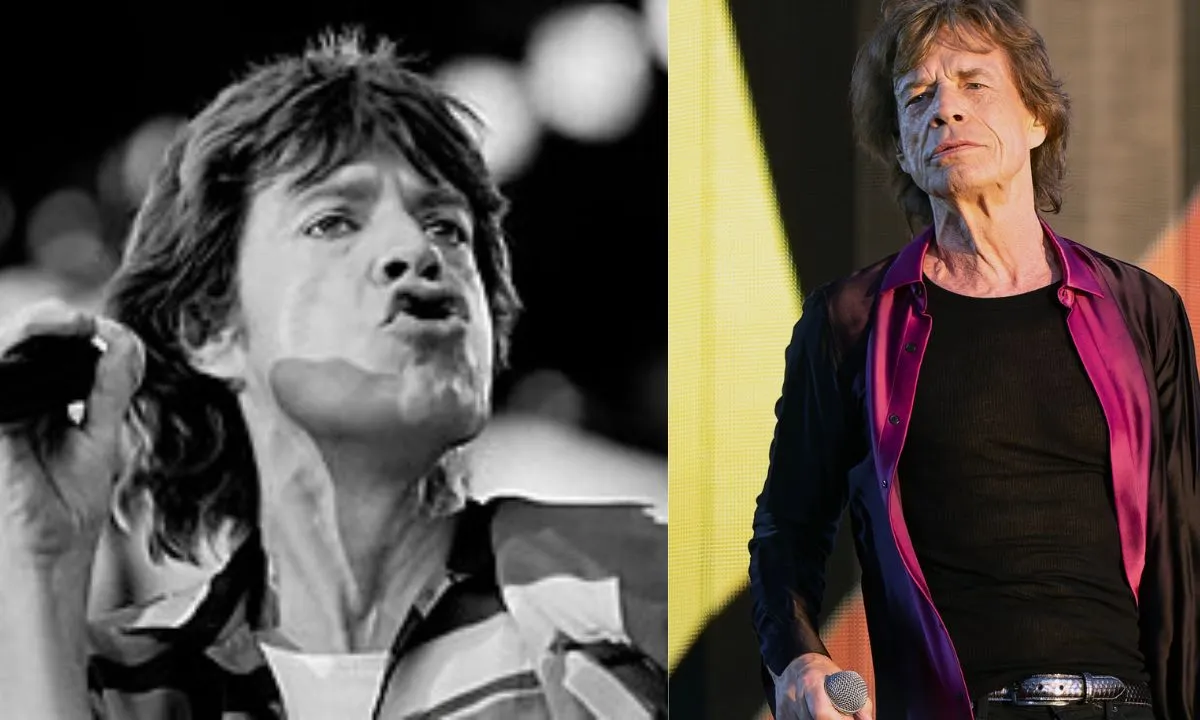
The complete story of her birth, death, mother Marianne Faithfull, grandparents, and family legacy.
Corrina Jagger: Quick Facts at a Glance
| Detail | Information |
| Full Name | Corrina Faithfull Jagger (also spelled Corinna) |
| Date of Loss | November 21, 1968 |
| Type of Loss | Stillbirth at approximately seven months |
| Father | Mick Jagger (Michael Philip Jagger) |
| Mother | Marianne Faithfull |
| Paternal Grandparents | Joe Jagger and Eva Mary Scutts |
| Maternal Grandparents | Glynn Faithfull and Eva von Sacher-Masoch |
| Parents’ Relationship | 1966 to 1970 |
| Find A Grave | Memorial No. 96071657 |
| Photos Available | None — she was stillborn |
Who Was Corrina Jagger? The Stillborn Daughter Behind the Legend
Corrina Jagger was the stillborn daughter of rock icon Mick Jagger and singer Marianne Faithfull. She never took a breath outside the womb, yet her short existence changed two lives permanently. Her story sits quietly in the corners of rock history, rarely told in full.
She is often left out of casual lists of Mick Jagger’s children, but she came first. Acknowledging her means understanding the grief that shaped both her parents through the 1970s and beyond.
Corrina vs Corinna: Why Is the Name Spelled Differently in Every Source?
Most modern biographies use the spelling Corrina, while some older press reports use Corinna. The variation came from early news coverage that had no single official birth record to follow. Both spellings refer to the same child, the same loss, and the same story.
Is There a Find A Grave Memorial for Corrina Jagger?
A Find A Grave memorial exists for Corrina Jagger, listed under memorial number 96071657. It confirms the date of death as November 21, 1968, and lists both parents by name. The entry is brief, which reflects how little official documentation was preserved at the time.
Corrina Jagger Photos: Why No Images Exist
No photos of Corrina Jagger exist in any public record, media archive, or family album that has been shared. She was stillborn, and in 1968 families rarely photographed infants lost at birth. The social norms of that era kept grief like this deeply private, far from any camera.
Today, hospitals often offer memory boxes and photographs to parents who experience stillbirth. In the 1960s, that compassionate practice did not exist. The absence of any image is itself a reflection of how society handled infant loss back then.
Corrina Jagger’s Mother: Who Was Marianne Faithfull?
Marianne Faithfull was one of the most distinctive voices of the British music scene in the 1960s. She grew up in Ormskirk, Lancashire, and was discovered at a London party in 1964 at just seventeen years old. Within months, she had a hit single and a career that looked destined for greatness.
Her name became inseparable from Swinging London, the same cultural moment that made the Rolling Stones global superstars. She later died on January 30, 2025, at age 78, after years of declining health.
Marianne Faithfull’s Rise to Fame Before Meeting Mick Jagger
Her debut single, As Tears Go By, reached the UK top ten in 1964 and was written specifically for her by Mick Jagger and Keith Richards. Andrew Loog Oldham, the Rolling Stones’ manager, had spotted her at a party and arranged the collaboration. She then built a parallel acting career, appearing in films that showcased a range far beyond singing.
Was Corrina Jagger Marianne Faithfull’s Only Child?
Corrina was not Marianne Faithfull’s only child. She had a son named Nicholas Dunbar, born in 1965, from her first marriage to art gallery owner John Dunbar. Corrina would have been her second child and her only one with Mick Jagger.
Corrina Jagger’s Grandparents: Mick Jagger’s Parents and Marianne Faithfull’s Family Roots
Corrina Jagger’s four grandparents came from two very different worlds. Her paternal side was working-class English, rooted in Dartford, Kent. Her maternal side carried European aristocratic blood, traced back to an Austrian baroness.
Mick Jagger’s Parents: Joe and Eva Jagger
Mick Jagger’s father, Basil Fanshawe ‘Joe’ Jagger, worked as a physical education teacher in Dartford, Kent. His mother, Eva Mary Scutts, was a hairdresser of Australian descent who had emigrated to England. They raised their two sons in a modest, disciplined household that gave little sign of the rock stardom ahead.
Marianne Faithfull’s Parents: Baron Erisso and Eva Faithfull
Marianne Faithfull’s father, Glynn Faithfull, was a British intelligence officer who later became a professor at Reading University. Her mother, Eva von Sacher-Masoch, was an Austrian baroness from a prominent European family. That contrast between English academia and Central European aristocracy gave Marianne a cultural complexity that set her apart from almost everyone in the 1960s pop world.
Mick Jagger and Marianne Faithfull: Swinging London’s Golden Couple
They met at a launch party in London in 1966 and became one of the most photographed couples of the entire decade. Jagger was already the face of rock rebellion, and Faithfull was its most refined female counterpart. Together, they defined what celebrity looked like before celebrity was even a proper industry.
Their relationship was chaotic from the start, marked by intense creativity and equally intense instability. The press documented every public appearance while knowing almost nothing about what happened behind closed doors.
Who Was Mick Jagger’s Greatest Love? The Debate Between Faithfull, Bianca, and Jerry Hall
Marianne Faithfull is widely considered the deepest romantic connection Mick Jagger ever had. In a 2007 interview, Faithfull herself said the love between them never truly ended, despite 37 years of little contact. Their bond survived breakup, addiction, illness, and decades apart, which is a stronger test than most marriages ever face.
Bianca Jagger brought a different kind of glamour and intellectual edge to his life. Jerry Hall gave him four children and over two decades of stability. But those who knew Jagger in the 1960s tend to agree that Faithfull reached him in a way the others did not.
Corrina Jagger’s Birth and Death: What Happened in November 1968?
Corrina Jagger was lost on November 21, 1968, at approximately seven months of gestation. Marianne Faithfull had been staying at Jagger’s country house in Ireland when complications arose. She was brought to hospital, but the baby did not survive.
At the time, the couple had already chosen the name Corrina and had begun preparing for the baby’s arrival. The loss arrived without warning and without any real support system around them.
What Caused the Stillbirth? Medical Context of 1960s Pregnancy Care
Routine ultrasound was not yet available to most patients in 1968, and fetal monitoring during pregnancy was far less advanced than it is today. Many complications that can be caught and treated now went undetected until it was too late. Stillbirth rates in the late 1960s were significantly higher than current figures, and grief support for bereaved parents was essentially nonexistent.
The Timeline: From Pregnancy Announcement to Loss
| Year / Month | Event |
| 1966 | Mick Jagger and Marianne Faithfull begin their relationship in London |
| Early 1968 | Marianne Faithfull becomes pregnant with their child |
| Mid 1968 | Couple prepares for the baby’s arrival; name Corrina is chosen |
| November 21, 1968 | Corrina Jagger is lost — stillborn at approximately seven months |
| 1969–1970 | Faithfull’s mental health deteriorates; addiction begins to take hold |
| 1970 | Jagger and Faithfull separate after four years together |
| 2007 | Jagger contacts Faithfull during her breast cancer treatment; reconciliation begins |
| January 30, 2025 | Marianne Faithfull dies at age 78 in London |
How Did Losing Corrina Affect Marianne Faithfull?
The loss broke something in Marianne Faithfull that she returned to in interviews for the rest of her life. She had no grief counseling, no public support structure, and no space to fall apart while cameras tracked her every move. The weight of unexpressed grief became something she carried alone for years.
Marianne’s Suicide Attempt and Descent Into Addiction
Faithfull later confirmed that she attempted suicide in the years following Corrina’s death, a detail she discussed in her 1994 autobiography Faithfull. Heroin and other substances became the way she numbed a grief she had no language for in public. By the mid-1970s, she had lost her recording career, her relationship with Jagger, and her sense of direction entirely.
Homelessness in Soho: How Far She Fell After Corrina’s Death
For a period in the mid-1970s, Marianne Faithfull was living rough on the streets of London’s Soho district. The woman who had appeared on every magazine cover and shared a home with rock’s most famous frontman was unrecognizable to the people who passed her. She later described this period as the lowest point of a descent that began the night she lost Corrina.
She eventually returned to music, releasing Broken English in 1979, which critics called a career resurrection. The rawness in that record is not manufactured — it came from lived experience that started in 1968.
How Did Mick Jagger Grieve Privately While the World Watched?
Jagger said almost nothing publicly about Corrina, either at the time or in the decades that followed. He continued touring, recording, and performing as though the loss had not happened, which was both a professional habit and a personal defense. People who worked closely with him describe a man who carried the grief quietly and did not invite questions about it.
His approach to fatherhood in the years that followed was shaped by what he lost in 1968. Eight living children came after Corrina, and those who know him say he has always been aware that she came first.
Why Did Mick Jagger Leave Marianne Faithfull? The Real Reasons
Jagger and Faithfull separated in 1970, just two years after losing Corrina. The grief had pulled them in different directions rather than drawing them closer, which is a pattern seen in many couples who lose a child. Faithfull’s increasing use of substances and her visible emotional instability made the relationship impossible to hold together any longer.
Jagger also began a relationship with Bianca Perez-Mora Macias around 1970, whom he married in 1971. The timing suggests the departure was not sudden but had been building since the loss. Faithfull later said she did not blame him for leaving, even if the way it ended was painful.
Did Corrina Jagger’s Death Influence Rolling Stones Music?
The emotional weight of 1968 seeped into the Rolling Stones records that came after it. Songs from the Sticky Fingers and Beggars Banquet era carry a heaviness that their earlier, brasher work never had. Whether directly inspired by Corrina or not, the grief of that period is audible in the music.
Wild Horses: The Grief Hidden Inside the Song
Wild Horses was written by Jagger and Richards around 1970, two years after losing Corrina. The song’s themes of reluctant separation and love that refuses to end read differently once you know the context. Music writers have long connected its emotional depth to the Jagger-Faithfull relationship and the loss they shared.
Sister Morphine: Marianne’s Cry for Help Co-Written With Jagger
Marianne Faithfull co-wrote Sister Morphine and first recorded it in 1969, though the Rolling Stones’ version appeared on Sticky Fingers in 1971. The song is about pain, hospitals, and the desperate need for relief. Faithfull said the song came from a real emotional place, and that place was very close to what she had lived through.
Songs Connected to the Loss: Full Table
| Song | Album | Year | Connection to Corrina’s Loss |
| Wild Horses | Sticky Fingers | 1971 | Themes of separation and enduring love, written during the Faithfull era |
| I Got the Blues | Sticky Fingers | 1971 | Raw heartbreak and melancholy with an R&B heaviness |
| Sister Morphine | Sticky Fingers | 1971 | Co-written by Faithfull; explores pain and the need for emotional escape |
| Let It Bleed | Let It Bleed | 1969 | Album recorded in the direct aftermath of the 1968 stillbirth |
| You Can’t Always Get What You Want | Let It Bleed | 1969 | Released one year after the loss; themes of unmet longing |
Mick Jagger’s Children: All 8 Kids and Their Mothers — Complete Guide
Mick Jagger has eight living children from five different women, and Corrina Jagger precedes them all. His youngest was born in 2016, making him a father at age 73. The range of ages and the number of mothers make this one of rock history’s most talked-about family trees.
| Name | Birth Year | Mother | Notable Career |
| Corrina Jagger | 1968 (stillborn) | Marianne Faithfull | First child; never lived |
| Karis Hunt Jagger | 1970 | Marsha Hunt | Film producer; paternity confirmed 1979 |
| Jade Jagger | 1971 | Bianca Jagger | Jewelry designer; worked with luxury brands |
| Elizabeth Jagger | 1984 | Jerry Hall | Model and actress |
| James Jagger | 1985 | Jerry Hall | Actor; appeared in Vinyl on HBO |
| Georgia May Jagger | 1992 | Jerry Hall | Model; face of major fashion campaigns |
| Gabriel Jagger | 1997 | Jerry Hall | Musician; keeps a low profile |
| Lucas Morad-Jagger | 1999 | Luciana Gimenez Morad | Based in Brazil; occasional public appearances |
| Deveraux Jagger | 2016 | Melanie Hamrick | Youngest child; 8 years old in 2025 |
Karis Jagger: Mick’s First Living Daughter and Her Life Today
Karis Hunt Jagger was born in November 1970 to American singer Marsha Hunt, one year after Corrina’s death. Jagger did not publicly acknowledge her until a paternity suit was settled in 1979. She later became a film producer and built a relationship with her father, though the early years were marked by legal disputes and public denial.0
Jade Jagger: Career, Children, and Jewelry Empire
Jade Jagger was born in 1971 to Bianca Jagger, Mick’s first wife, and grew up largely in Europe. She built a respected career as a jewelry designer and has collaborated with brands including Bulgari. She has two daughters of her own, making Mick Jagger a grandfather through her line.
Gabriel Jagger, Georgia May, James, Elizabeth, Lucas, and Deveraux
Jerry Hall gave Jagger four children between 1984 and 1997: Elizabeth, James, Georgia May, and Gabriel. Georgia May became one of Britain’s most successful models, appearing in major fashion campaigns. Lucas Morad-Jagger, born in 1999 to Brazilian TV presenter Luciana Gimenez Morad, is mostly based in Brazil.
How Old Is Mick Jagger’s Youngest Child? Deveraux Jagger in 2026
Deveraux Basil Jagger was born on December 8, 2016, to American ballet dancer Melanie Hamrick. He turned 9 years old in December 2025, making him 10 in 2026. Jagger was 73 at the time of Deveraux’s birth, which made him one of the oldest rock stars to become a father.
Hamrick was 36 years younger than Jagger when Deveraux arrived. The age gap drew significant media attention, though Jagger has maintained a close relationship with his youngest son.
Who Was Mick Jagger’s Disowned Daughter? The Karis Jagger Paternity Story
Karis Hunt Jagger is the child most often described as the daughter Jagger initially refused to claim. Her mother Marsha Hunt went public with a paternity suit in 1979 after years of private attempts to get Jagger to acknowledge the child. He eventually settled the case and began building a relationship with Karis, who was nearly nine years old by then.
The word ‘disowned’ is somewhat misleading — he did not formally disown her but rather denied paternity for years without legal action. Karis has since spoken about her father with warmth in interviews and has been part of the wider Jagger family in adulthood.
Who Is Zachary Watson and How Does He Connect to the Jagger Family?
Zachary Watson appears in search results alongside Mick Jagger and Karis Jagger, which suggests a family connection through that branch. Karis Jagger, now in her mid-50s, has kept her personal life mostly out of the public eye. Public records on this specific connection remain limited, and no verified biography has confirmed the exact relationship.
What is clear is that Mick Jagger is a grandfather multiple times over through several of his children, and the Jagger family now spans three clear generations. Searches for names like Zachary Watson reflect growing public interest in the broader family tree.
Corrina Jagger’s Legacy After Marianne Faithfull’s Death in 2025
Marianne Faithfull died on January 30, 2025, at age 78, after a long decline following years of health problems including breast cancer, hepatitis C, and the lasting physical damage from her years of addiction. Her death renewed global attention on every chapter of her life, including the baby she lost in 1968. Corrina Jagger’s name appeared in searches more frequently in early 2025 than it had in decades.
Obituaries and tribute pieces that ran across major publications referenced the 1968 stillbirth as one of the defining emotional events of Faithfull’s life. Losing Corrina was the wound that split her story into before and after, and Faithfull herself described it that way in multiple interviews over the years.
Mick Jagger and Marianne Faithfull’s 2007 Reconciliation: Love That Survived 35 Years
After more than three decades of little contact, Jagger reached out to Faithfull in 2007 when she was undergoing treatment for breast cancer. His call surprised her, and she later described it in interviews as one of the most meaningful moments of her later years. The gesture showed that whatever they had shared in the 1960s, including the loss of Corrina, had not been erased by time or pain.
Faithfull said in one interview that she and Jagger would always be connected, that their shared grief created a bond no breakup could fully dissolve. They remained in contact from 2007 until her death in 2025, which was a reconciliation that lasted longer than their original relationship.
The Jagger Family Tree: Where Does Corrina Fit In?
| Generation | Name | Relation to Mick Jagger | Born |
| Parents | Joe and Eva Jagger | Mick’s parents | 1913 / 1913 (approx.) |
| Mick Jagger | Michael Philip Jagger | Subject — Rolling Stones frontman | July 26, 1943 |
| Children (Gen 1) | Corrina Jagger | First child — stillborn | November 1968 |
| Children (Gen 1) | Karis Hunt Jagger | First living child | 1970 |
| Children (Gen 1) | Jade Jagger | Second living child | 1971 |
| Children (Gen 1) | Elizabeth, James, Georgia, Gabriel | Children with Jerry Hall | 1984–1997 |
| Children (Gen 1) | Lucas Morad-Jagger | Son with Luciana Morad | 1999 |
| Children (Gen 1) | Deveraux Jagger | Youngest child | 2016 |
| Grandchildren (Gen 2) | Multiple grandchildren | Through Jade, Karis, and others | Various |
Corrina sits at the very beginning of that first-generation column, before every child Jagger would go on to raise. Her absence is the starting point of the family story, not a footnote at the end of it.
Stillbirth in the 1960s: Why Corrina’s Story Was Silenced by Society
In 1968, stillbirth carried a social stigma that made public grief almost impossible to express. Families were advised by medical staff and even friends to move on quickly and not speak about the child they had lost. The cultural message was to bury the grief alongside the baby, which is exactly what happened to Jagger and Faithfull.
The word stillbirth was rarely printed in newspapers. Celebrity coverage of the loss was minimal, and neither parent was offered any formal support. What might today result in memorial services, grief counseling, and public acknowledgment was, in 1968, handled with near-total silence.
That silence was not coldness. It was the only language available. Both parents paid a long price for having no other words.
Pros and Cons of Writing About Celebrity Tragedy in Public Sources
| Pros | Cons |
| Humanizes public figures beyond their famous work | Risk of sensationalizing real grief for clicks |
| Preserves historical record of overlooked figures like Corrina | Limited verified sources available for stillborn children |
| Educates readers on how stillbirth was handled in the 1960s | Privacy interests of surviving family members |
| Gives Corrina her rightful place in Jagger family history | Potential for misinformation when records are scarce |
| Connects music history to its human emotional roots | Some readers may find the topic distressing |
Frequently Asked Questions About Corrina Jagger
Who was Corrina Jagger?
Corrina Jagger was the stillborn daughter of Mick Jagger and Marianne Faithfull, lost on November 21, 1968, at approximately seven months of pregnancy.
Who is Corrina Jagger’s mother?
Corrina Jagger’s mother was Marianne Faithfull, the British singer and actress who died on January 30, 2025, at age 78.
Are there any photos of Corrina Jagger?
No photos of Corrina Jagger exist in any public archive. She was stillborn in 1968, and at that time it was not common practice to photograph infants lost at birth.
Who were Corrina Jagger’s grandparents?
Her paternal grandparents were Joe Jagger and Eva Mary Scutts. Her maternal grandparents were Glynn Faithfull and Eva von Sacher-Masoch, an Austrian baroness.
Why did Mick Jagger leave Marianne Faithfull?
Jagger and Faithfull separated in 1970 after the grief from losing Corrina pulled them in opposite directions. Faithfull’s addiction and emotional instability made the relationship impossible to sustain.
Who was Mick Jagger’s greatest love?
Most biographers and people who knew the couple closely point to Marianne Faithfull as the deepest romantic connection of Jagger’s life. Their bond lasted well beyond the end of their relationship, right up to her death in 2025.
Who is Mick Jagger’s disowned daughter?
Karis Hunt Jagger is most often described this way, though disowned is not quite accurate. Jagger denied paternity for years before a 1979 legal settlement, after which he built a relationship with her.
How old is Mick Jagger’s youngest child in 2025?
Deveraux Basil Jagger, born on December 8, 2016, turned 8 in December 2024 and is 8 years old in 2025.
Who is Zachary Watson?
Zachary Watson is searched alongside Karis Jagger and the wider Jagger family, suggesting a family connection through that branch. Specific verified details about his role in the family are not confirmed in public biographical sources.
Conclusion: A Life Never Lived, a Legacy Never Forgotten
Corrina Jagger existed for only a matter of hours, if at all outside the womb, yet her name has outlasted decades of music journalism and celebrity biography. She was the first child of two of the most famous people in 1960s Britain, and her loss shaped both of them in ways that showed up in their music, their relationships, and their ability to hold anything steady afterward.
Mick Jagger went on to raise eight children across five decades. Marianne Faithfull rebuilt her career from nothing and became one of the most respected voices in European music before her death in 2025. Both of them carried Corrina with them through all of it.
She deserves more than a footnote in someone else’s story. Her name was chosen, her arrival was prepared for, and her absence left a mark that no number of Rolling Stones records has ever quite covered. Corrina Faithfull Jagger: November 21, 1968.

Adam is a skilled writer with 4 years of experience in celebrity net worth and biography blogs. Currently, he contributes his expertise to enhancing content at InfoCelebz, providing accurate and engaging information.