

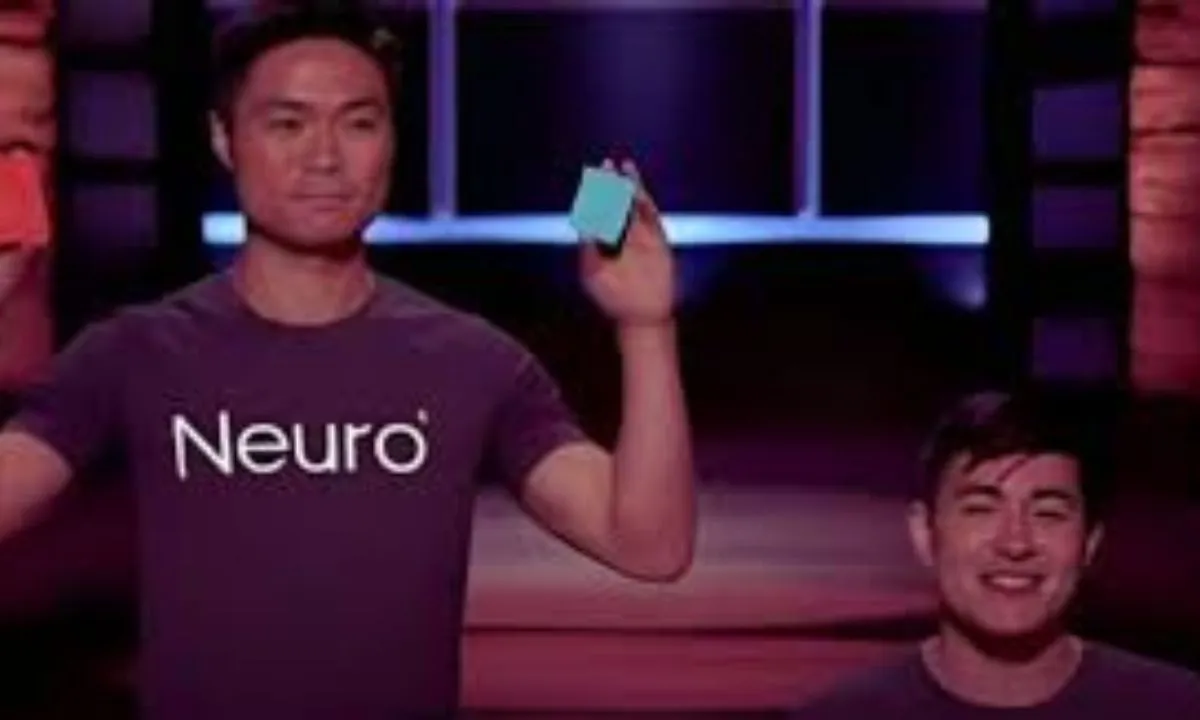
Joe Rogan held up a small piece of gum on camera and said something like, “This stuff actually works.” That was it. No paid promotion. No press release. Just a genuine shoutout on one of the most-listened-to podcasts on the planet. Within 24 hours, Neuro Gum’s website crashed from traffic. Amazon listings sold out. The brand’s social media exploded.
That one moment didn’t build Neuro Gum — but it showed exactly why the brand was already quietly winning. By 2026, Neuro Gum’s estimated net worth sits between $80 million and $150 million. Some analysts are bold enough to project a $500 million valuation within the next few years. For a company that started with two college friends, a crowdfunding page, and a belief that chewing gum could replace your morning coffee — that’s not a small story.
This is the full breakdown of how it happened.
Quick Answer: Neuro Gum Net Worth at a Glance
Estimated Net Worth (2026): $80 Million – $150 Million
Founders: Kent Yoshimura & Ryan Chen
Founded: 2015, Los Angeles, California
Shark Tank: Season 11 — No Deal (walked away)
Annual Revenue (est. 2026): $40M – $80M+
Retail Locations: 10,000+ across the United States
Units Sold: 50 Million+
Seed Funding: $8.3 Million (2023)
Neuro Gum Net Worth 2026 — The $80M to $150M Estimate Explained
Let’s be honest — “estimated net worth” for a private company is always part guesswork. Neuro Gum isn’t listed on any stock exchange. They don’t publish quarterly earnings. But based on confirmed data points — seed funding, retail distribution, revenue estimates, and comparable company acquisitions — the $80M to $150M range is the most credible figure out there.
How the Valuation Was Calculated
Two standard methods are used to value consumer brands like this. The first is the revenue multiple approach. Consumer packaged goods companies in the functional wellness space typically trade at 3x to 8x their annual revenue, with high-growth brands sometimes commanding up to 12x. If Neuro Gum is doing $40M to $80M annually in 2026, even a conservative 3x multiple puts them at $120M to $240M.
The second method is EBITDA-based. Neuro Gum’s estimated profit margins run between 25% and 35% — well above the CPG industry average of 15% to 20%. Apply a standard 10x to 15x EBITDA multiple to those numbers and you land squarely in the $80M to $150M territory.
| Method | Revenue/Profit Estimate | Multiple Applied | Implied Valuation |
|---|---|---|---|
| Revenue Multiple (3x) | $40M–$80M revenue | 3x | $120M–$240M |
| Revenue Multiple (conservative) | $40M–$80M revenue | 2x–2.5x | $80M–$150M |
| EBITDA Multiple | $10M–$20M EBITDA | 10x–15x | $100M–$300M |
| Comparable Acquisitions | Liquid IV sold for ~$500M | Reference | Signals premium ceiling |
Neuro Gum Net Worth — What Forbes and Major Media Say
Neuro Gum has been featured in Forbes, Business Insider, and Entrepreneur Magazine — not once but multiple times since their Shark Tank appearance in 2019. These aren’t paid placements. The brand earned its media coverage the old-fashioned way: by being genuinely interesting.
Forbes highlighted the founders’ decision to walk away from the Tank as a case study in founder conviction. Business Insider covered the brand’s e-commerce growth during the pandemic. Entrepreneur profiled Kent Yoshimura’s story as an artist-athlete turned CEO. Each media hit added another layer of credibility that no advertising budget could buy.
| Publication | Coverage Focus | Year |
|---|---|---|
| Forbes | Shark Tank rejection turned $150M brand | 2020–2024 |
| Business Insider | E-commerce growth, DTC strategy | 2020–2022 |
| Entrepreneur Magazine | Kent Yoshimura founder profile | 2021–2023 |
| Inc. Magazine | Nootropics market expansion | 2022–2024 |
| TechCrunch | $8.3M seed funding announcement | 2023 |
The $500 Million Projection — Is It Realistic?
Some analysts are projecting Neuro Gum could reach a $500 million valuation in the next few years. Honestly? It sounds ambitious, but it’s not crazy. The global nootropics market is expected to surpass $5 billion by 2027, growing at a 12% to 15% compound annual rate. Neuro Gum is positioned as the most accessible, retail-friendly brand in that space. If an acquisition happens — and that’s a real possibility — the number could jump fast.
Company Snapshot — Everything You Need to Know in One Place
| Field | Details |
|---|---|
| Company Name | Neuro Gum (NeuroGum, Inc.) |
| Founded | 2015 |
| Headquarters | Los Angeles, California |
| Co-Founders | Kent Yoshimura (Co-CEO) & Ryan Chen (Co-CEO) |
| Industry | Functional Wellness / Nootropic Supplements |
| Products | Functional gum, mints, energy, focus, calm, sleep |
| Shark Tank Season | Season 11, ABC (aired 2019) |
| Shark Tank Ask | $750,000 for 5% equity |
| Shark Tank Result | No deal — founders walked away |
| Confirmed Seed Funding | $8.3 million (2023) |
| Units Sold | 50+ million (some estimates say 100M+) |
| Retail Locations | 10,000+ U.S. stores |
| Estimated Valuation 2026 | $80 million – $150 million |
| Est. Annual Revenue 2026 | $40 million – $80 million+ |
| Key Certifications | Non-GMO Verified, Vegan, Gluten-Free |
Is Neuro Gum Still in Business? — 2026 Status Update
Yes — emphatically, yes. Neuro Gum is not just still in business, it’s arguably operating at the highest level in its history. This question comes up more than you’d think, probably because people assume that walking away from Shark Tank without a deal means failure. It doesn’t.
Current Proof of Operations
As of 2026, Neuro Gum products sit on shelves in over 10,000 retail locations across the United States — including CVS, Walmart, Target, GNC, and Whole Foods. Their TikTok Shop generates an estimated $3.5 million per month. Amazon sales consistently clock in above $2.2 million monthly. These aren’t metrics of a struggling brand.
The company completed an $8.3 million seed funding round in 2023, which signals strong investor confidence. You don’t raise that kind of money unless your fundamentals are solid and your growth trajectory is convincing.
Was Neuro Gum Successful After Shark Tank?
By most measures, Neuro Gum is one of the most successful “no deal” exits in Shark Tank history. The show itself gave them something more valuable than capital — national visibility. Website traffic spiked 400% within 48 hours of the episode airing. Media coverage poured in. And because they hadn’t given away equity, every dollar of that growth belonged entirely to Kent and Ryan.
| Year | Key Milestone |
|---|---|
| 2019 | Shark Tank appearance — no deal, but national exposure |
| 2020 | COVID e-commerce surge — DTC sales doubled |
| 2022 | CVS partnership — entered 5,500+ pharmacy locations |
| 2023 | $8.3M seed round confirmed — retail expansion accelerates |
| 2024 | TikTok Shop launch — $3.5M/month average within months |
| 2026 | 10,000+ retail stores, estimated $80M–$150M valuation |
How Is Neuro Doing After Shark Tank?
Better than most companies that did get a deal. That’s not sarcasm — it’s just the data. The Sharks who passed on Neuro Gum have since watched the brand grow to a nine-figure valuation without their involvement. Kent and Ryan didn’t need the money as much as they needed the exposure, and the show gave them exactly that.
Neuro Gum Founders — The Real Story Behind Kent Yoshimura and Ryan Chen
Most brands have a founding story. Neuro Gum has two — and they’re both genuinely worth knowing. The people behind this company aren’t typical startup founders who stumbled into wellness. They lived the problem they were trying to solve.
Kent Yoshimura — From Judo Champion to Brand Visionary
Kent Yoshimura wasn’t just an athlete — he was competing at a level most people don’t reach. During his years at the University of California, he trained for the Japanese Judo team while simultaneously fighting Muay Thai internationally. That’s a schedule that demands an almost obsessive level of mental focus and physical recovery.
He wasn’t reaching for energy drinks between training sessions because he liked the taste. He needed something clean, fast-acting, and portable. That specific frustration — the gap between what was available and what he actually needed — planted the seed for Neuro Gum.
Today, as Co-CEO, Kent owns the brand side: product identity, marketing vision, consumer psychology, and creative direction. His background as a visual artist shows in Neuro Gum’s packaging and tone — it doesn’t look or feel like a supplement brand. It feels like a lifestyle product. That distinction matters more than people realize in a crowded market.
Ryan Chen — From Paralympic Dream to Co-CEO
Ryan Chen’s story hits differently. He was training with the US Paralympic team when a snowboarding accident changed everything. He couldn’t walk. The recovery was long, difficult, and forced him to rebuild his life from a different starting point.
That experience — being physically forced to slow down and think about what he was actually putting into his body — shaped his entire approach to nutrition and supplementation. When he and Kent began talking seriously about what would become Neuro Gum, Ryan brought a research-first mindset that kept the product grounded in actual science rather than marketing claims.
As Co-CEO handling operations, supply chain, and finance, Ryan is the infrastructure that makes everything Kent envisions actually work. They’ve said in interviews that they genuinely don’t overlap — Kent doesn’t micromanage the numbers, Ryan doesn’t freelance on the creative. It’s a partnership that, in practice, is rarer than it sounds.
Founders’ Personal Net Worth 2026
| Detail | Kent Yoshimura | Ryan Chen |
|---|---|---|
| Role | Co-CEO — Brand, Creative, Marketing | Co-CEO — Science, Operations, Finance |
| Background | Judo champion, Muay Thai fighter, visual artist | Paralympic trainee, health researcher, operator |
| Education | University of California | University of California (Neuroscience focus) |
| Est. Personal Net Worth (2026) | $20M – $35M | $20M – $35M |
| Primary Asset | Equity stake in Neuro Gum | Equity stake in Neuro Gum |
Founding Story — $20,571 on Indiegogo to a Nine-Figure Brand
It started small. Very small. In 2015, Kent and Ryan launched a crowdfunding campaign on Indiegogo with one straightforward goal: prove that people actually wanted a functional gum before they built a real company around it. They raised $20,571. Enough to be real. Not enough to make anyone rich.
But the validation mattered. Real people — strangers, not friends — pulled out their credit cards and backed the idea. That’s a different kind of signal than a focus group.
The Problem They Were Actually Solving
The energy product market in 2015 was dominated by sugary drinks and powder supplements. Red Bull. Celsius. Protein shakes. All of them had one thing in common: they took time to kick in, required a container, and came loaded with sugar or artificial flavors. For an athlete mid-workout or a student mid-exam, that’s genuinely inconvenient.
Kent and Ryan wanted something you could pop in your mouth anywhere, with no prep time and no crash afterward. The concept of buccal absorption — delivering active ingredients through the lining of your cheek rather than through your digestive system — was already understood in pharmaceutical circles. Nobody had seriously applied it to a mainstream consumer wellness product.
50 Formulas Before Getting It Right
The product development phase involved more than 50 different formula iterations. The biggest challenge wasn’t the science — it was taste. Natural caffeine is bitter. L-theanine has its own distinct profile. Getting both into a piece of gum that someone would actually want to chew, at the right dosage, took months of work.
They eventually landed on 40mg of natural green tea caffeine per piece — roughly equivalent to half a cup of coffee — paired with L-theanine and B vitamins. The combination produced smooth, jitter-free energy. No spike, no crash. Just clean focus.
The $8.3 Million Seed Round
In 2023, Neuro Gum confirmed a seed funding round of $8.3 million. The timing is telling — they didn’t need outside capital to survive. By then, the brand was already profitable. The funding was strategic: fuel for retail expansion, supply chain investment, and accelerated product development. Raising money from a position of strength is a very different conversation than raising money out of desperation.
Neuro Gum’s Shark Tank Moment — The No Deal That Changed Everything
Season 11 of ABC’s Shark Tank. Kent and Ryan walk out, product in hand, and ask for $750,000 in exchange for 5% of the company. That implies a $15 million valuation. The Sharks listen. Some are interested. The room gets complicated.
The Pitch Breakdown
| Detail | Info |
|---|---|
| Season / Network | Season 11 / ABC (2019) |
| Ask | $750,000 for 5% equity |
| Implied Valuation | $15 million |
| Sharks in Room | Mark Cuban, Robert Herjavec, Lori Greiner, Kevin O’Leary, Daniel Lubetzky |
| Most Interested Shark | Robert Herjavec |
| Counter Offer | $1 million for 20% equity (Herjavec) |
| Other Reactions | Cuban — concerned about supplement claims; Lubetzky — passed |
| Final Outcome | No deal — founders rejected all terms |
Why They Said No
Robert Herjavec’s offer of $1 million for 20% equity was, on paper, generous. More money than they asked for. But the equity ask was the problem. Giving up 20% of the company at a $5 million implied valuation — when they believed the business was worth three times that — would have been a bad deal. They knew it. They said no.
It wasn’t bravado. It was math. And in hindsight, it was the right call by a wide margin.
What Would They Have Lost?
If Kent and Ryan had accepted Herjavec’s 20% offer in 2019, that stake would be worth somewhere between $16 million and $30 million today based on the current $80M–$150M valuation. They would have gotten $1 million upfront and handed away tens of millions of future value. Walking away was worth it.
The Shark Tank Effect — Even Without a Deal
Here’s what’s often missed in the Neuro Gum narrative: the show still worked for them. Website traffic jumped 400% in the 48 hours after the episode aired. Media outlets covered the bold founders who turned down the Sharks. The brand story — two athletes building a science-backed product on their own terms — was exactly the kind of narrative the press loves.
The episode became free marketing worth far more than $750,000.
The Joe Rogan Effect — When One Podcast Mention Changed Sales Overnight
There’s no gentle way to say this: Joe Rogan’s audience is enormous, loyal, and highly responsive to product recommendations. When Rogan mentions something — genuinely, not as a paid spot — his listeners act. And at some point, Neuro Gum ended up in his hands.
What Happened and When
Rogan mentioned Neuro Gum organically during a podcast episode, noting it as something he actually used. He wasn’t reading from a script. He wasn’t mid-ad-break. It was the kind of casual, conversational endorsement that money literally cannot buy — because the moment it becomes paid, it loses credibility.
The reaction was immediate. Within 24 hours, the brand’s website traffic spiked sharply. Amazon reviews began piling up. The brand’s social media mentions multiplied across platforms. For a DTC brand that was already growing steadily, it was a step-change moment.
Why Organic Beats Paid — Every Time
Neuro Gum’s marketing playbook has always leaned heavily on organic credibility over paid placement. They’ve partnered with micro-influencers in fitness, productivity, and biohacking communities who genuinely use and believe in the product. The Rogan mention validated that approach publicly. Paid influencer content has its place — but when someone with Rogan’s reach says something without being paid to say it, the trust signal is exponentially stronger.
Revenue Timeline 2015–2026 — How the Money Actually Grew
The financial story of Neuro Gum is not about one dramatic spike. It’s about steady, disciplined growth year over year — the kind that builds a real business rather than a viral moment.
| Year | Est. Annual Revenue | Key Milestone |
|---|---|---|
| 2015 | ~$20K (crowdfunding) | Indiegogo launch — $20,571 raised |
| 2016–2017 | $500K – $1M | Shopify + Amazon DTC begins scaling |
| 2018–2019 | $3M – $5M | Shark Tank appearance — retail expansion begins |
| 2020 | $5M – $8M | COVID e-commerce surge — work-from-home demand spike |
| 2022 | $8M – $12M | CVS pharmacy partnership — 5,500+ locations |
| 2023 | $12M – $18M | $8.3M seed round — international expansion begins |
| 2024 | $15M – $25M | TikTok Shop launch — $3.5M/month average |
| 2026 | $40M – $80M+ | 10,000+ stores — subscription model scaling |
Spotlight on 2022 — The CVS Year
If there’s one milestone that shifted Neuro Gum from a successful DTC brand into a genuinely mainstream product, it’s the CVS partnership. Getting into 5,500+ CVS pharmacy locations is not easy. CVS is selective. They want brands with proven repeat purchase rates, clean margin structures, and reliable supply chains. Neuro Gum had all three.
The Subscription Model — 25–30% of Total Revenue
Subscription revenue is the metric that investors actually get excited about. Neuro Gum’s subscribe-and-save model — which offers a discount (typically 15% to 20%) for automatic monthly delivery — now accounts for roughly 25% to 30% of total revenue. That’s predictable cash flow. That’s the metric that makes a brand acquisition-ready.
Neuro Gum Review 2026 — What Real People Actually Say
Marketing copy is easy to write. Customer reviews are harder to fake. Here’s what real Neuro Gum users across Amazon, Reddit, and wellness communities have been saying — and it’s not all glowing.
Amazon Reviews Breakdown
| Rating | Proportion | Common Feedback Theme |
|---|---|---|
| ⭐⭐⭐⭐⭐ 5 Stars | ~62% | Noticeable focus, no jitters, convenient for work and gym |
| ⭐⭐⭐⭐ 4 Stars | ~18% | Works well but flavor could improve; price slightly high |
| ⭐⭐⭐ 3 Stars | ~10% | Subtle effects; not as strong as coffee for some users |
| ⭐⭐ 2 Stars | ~6% | Texture complaints; preference for traditional caffeine |
| ⭐ 1 Star | ~4% | No perceived effect; packaging issues in shipping |
What Reddit and Real Users Are Saying
Reddit’s biohacking and productivity communities have been discussing Neuro Gum for years. The consensus leans positive, particularly among people who are caffeine-sensitive and find traditional energy drinks too intense. The L-theanine combination gets mentioned constantly — users report the calm-focus feeling as genuinely different from straight caffeine.
Expert Opinion
Nutritionists and performance coaches who have reviewed the formula generally land in the same place: the caffeine-L-theanine stack is one of the most well-documented combinations in performance nutrition research. The honest expert verdict: it’s a well-formulated, science-grounded product in an accessible delivery format. It’s not magic. But it’s not pretending to be.
Neuro Gum Product Line 2026 — Every SKU Explained
What started as a single product has grown into a full wellness ecosystem. Each SKU targets a different moment in the user’s day — energy in the morning, focus during deep work, calm when stress spikes, sleep support at night.
| Product | Key Ingredients | Purpose | Price (approx.) |
|---|---|---|---|
| Neuro Gum (Original) | 40mg Caffeine + L-Theanine + B6 + B12 | Energy & mental focus | $15–$18 / pack |
| Neuro Mints | Same nootropic formula as gum | Discreet cognitive enhancement | $15–$18 / pack |
| Neuro Energy | Higher caffeine + B vitamins | High-intensity performance | $16–$20 / pack |
| Neuro Focus | Nootropic blend for concentration | Deep work & study sessions | $16–$20 / pack |
| Neuro Calm | L-Theanine focused formula | Stress reduction & relaxation | $15–$18 / pack |
| Neuro Sleep | Melatonin + Magnesium | Nighttime recovery & sleep | $16–$20 / pack |
All products are sugar-free, aspartame-free, gluten-free, Non-GMO Project Verified, and vegan-friendly. In a market full of supplements making questionable claims, these certifications represent actual quality commitments — not just marketing copy.
The Science Behind Neuro Gum — Why the Formula Actually Works
A lot of supplement brands use scientific-sounding language to sell products that are, at best, lightly supported by evidence. Neuro Gum’s formula sits on a more solid foundation than most. Here’s why.
Buccal Absorption — What It Actually Means
Most supplements are swallowed and absorbed through the digestive system — a process that can take 30 to 60 minutes. Buccal absorption bypasses most of that. The inner lining of your cheek — the buccal mucosa — is thin, richly vascularized, and allows compounds to pass directly into the bloodstream. Pharmaceutical companies have used this route for decades. Neuro Gum applies it to caffeine and L-theanine, with effects reportedly felt in as little as 5 to 10 minutes.
That’s the genuine innovation here — not a new ingredient, but a smarter delivery system.
Caffeine + L-Theanine — The Most Studied Stack in Performance Nutrition
A 2008 paper in Nutritional Neuroscience demonstrated that this combination improves both speed and accuracy on attention-switching tasks more effectively than either compound alone. L-theanine softens caffeine’s stimulatory edge — reducing anxiety, preventing jitters, and smoothing the energy curve.
B6 and B12 — Why They’re in the Formula
| Ingredient | Role | Neuro Gum Dose | NIH Recommended Daily |
|---|---|---|---|
| Vitamin B6 | Neurotransmitter synthesis — dopamine, serotonin, GABA | 10mg | 1.3–1.7mg adults |
| Vitamin B12 | Nerve function, energy metabolism | 500mcg | 2.4mcg adults |
| Natural Caffeine | Adenosine receptor blockade — reduces fatigue | 40mg per piece | Up to 400mg daily safe |
| L-Theanine | Alpha brainwave promotion, cortisol reduction | 40mg per piece | No official RDA |
Neuro Gum Side Effects — Is It Safe? The Honest Answer
Any product containing caffeine has the potential for side effects. Pretending otherwise would be misleading. The good news is that Neuro Gum’s formulation is designed to minimize the downsides — and the risk profile is well understood.
Common Side Effects to Know
The most frequently reported side effects track directly to caffeine sensitivity:
- Jitteriness or restlessness — more likely if you take multiple pieces quickly
- Mild headache — especially in caffeine-sensitive individuals
- Difficulty sleeping — if taken too close to bedtime
- Increased heart rate — at higher doses or in sensitive individuals
- Jaw soreness — very rarely reported from extended chewing sessions
Who Should Be Cautious or Avoid It
- Pregnant or breastfeeding women — caffeine intake should be monitored carefully
- People with heart arrhythmias or high blood pressure — consult a doctor first
- Children and teenagers — the product is formulated for adults
- Individuals with caffeine sensitivity — start with one piece and assess tolerance
- People on MAO inhibitors or certain antidepressants — caffeine interactions possible
Safe Dosage Guidelines
The FDA considers 400mg of caffeine per day safe for healthy adults. At 40mg per piece, that’s a ceiling of 10 pieces daily — a number almost no one reaches in practice. The brand recommends 1 to 2 pieces as a starting point. Most users settle at 2 to 4 pieces spread across the day. One important note: if you’re already drinking multiple cups of coffee, add your Neuro Gum intake to your total daily caffeine count.
Neuro Gum vs Red Bull vs Coffee vs Energy Drinks — Head-to-Head
The comparison people want to see. How does Neuro Gum actually stack up against the products it’s trying to replace?
| Product | Caffeine | Sugar | Price/Serving | Absorption | Crash Risk | Portability |
|---|---|---|---|---|---|---|
| Neuro Gum (1 piece) | 40mg | 0g | ~$1.25 | 5–10 min | Low | Excellent |
| Neuro Gum (2 pieces) | 80mg | 0g | ~$2.50 | 5–10 min | Low | Excellent |
| Red Bull (250ml) | 80mg | 27g | ~$2.50 | 30–45 min | High | Moderate |
| Celsius (355ml) | 200mg | 0g | ~$3.00 | 30–45 min | Moderate | Moderate |
| Black Coffee (8oz) | 95mg | 0g | ~$0.50 | 30–45 min | Moderate | Poor |
| 5-Hour Energy Shot | 200mg | 0g | ~$3.50 | 15–30 min | High | Good |
Who Gets the Most Value from Neuro Gum
- Students — study sessions where coffee is inconvenient or unavailable
- Athletes and gym-goers — clean pre-workout energy without digestive discomfort
- Remote workers — focus support during long work-from-home days
- Gamers — sustained cognitive performance during extended sessions
- Travelers — TSA-friendly, no liquid restrictions, no cup required
Retail Distribution — How Neuro Gum Reached 10,000+ Stores
Getting a product into 10,000 retail locations is not an accident. It requires a supply chain that can deliver at scale, margins that work for both sides of the deal, and a consumer demand signal strong enough to convince buyers at large retail chains. Neuro Gum built that foundation slowly, starting DTC and using proven online demand as the argument for retail entry.
| Retailer | Channel Type | Approx. Locations | Why It Matters |
|---|---|---|---|
| CVS Pharmacy | Health & wellness retail | 5,500+ | Pharmacy placement = trust signal |
| Walmart | Mass retail | 4,200+ | Volume driver — mainstream access |
| Target | Premium mass retail | 600+ wellness sections | Lifestyle brand visibility |
| GNC | Supplement specialty | National | Core supplement buyer audience |
| Whole Foods Market | Premium organic grocery | Select locations | Health-conscious consumer signal |
| Vitamin Shoppe | Health specialty | National | Repeat purchase supplement shoppers |
| Amazon | E-commerce | Online | $2.2M+ monthly |
| TikTok Shop | Social commerce | Online | $3.5M+ monthly — fastest growing |
Digital Marketing Strategy — How TikTok Became a $3.5M Monthly Machine
Most brands talk about TikTok. Neuro Gum actually figured it out.
The Content Strategy That Worked
The brand didn’t run polished ads. They tapped into organic content formats that their target audience was already watching — “study with me” videos, work-from-home vlogs, productivity routines, gym prep content. By partnering with micro-influencers in the productivity, student, and fitness spaces — people with 50K to 500K followers who genuinely used the product — Neuro Gum built discovery in contexts where the product made complete sense.
Amazon — The Other Revenue Engine
Amazon isn’t glamorous, but it generates an estimated $2.2 million-plus per month. That’s driven by strong listing optimization, a high volume of genuine reviews, and Prime eligibility — all the basics executed well.
| Digital Channel | Performance Metric |
|---|---|
| TikTok Shop | $3.5M average monthly sales |
| Amazon | $2.2M+ monthly revenue |
| Official Website (DTC) | ~16% conversion rate (industry avg: 2–3%) |
| Email Marketing | 26% open rate — 200,000+ subscribers |
| Influencer Campaigns | 420% measured ROI |
| Paid Advertising (Meta/Google) | 5.5:1 return on ad spend (ROAS) |
B2B Corporate Wellness and International Expansion — What’s Next
There are two growth chapters for Neuro Gum that haven’t fully been written yet. Both are significant.
Fortune 500 Corporate Wellness — The Untapped Channel
Corporate wellness programs have become a serious business. Companies are buying supplements, fitness memberships, and mental health tools in bulk for employees. Neuro Gum is a natural fit — TSA-friendly, office-appropriate, and positioned around focus and productivity rather than bodybuilding. B2B sales typically carry higher margins than retail because there’s no intermediary markup eating into the price.
International Expansion — Canada, UK, Australia
The brand has started entering international markets, with Canada, the United Kingdom, and Australia as initial targets. Smart first moves — English-speaking markets with similar wellness consumer profiles to the US. International revenue is small right now, but the groundwork being laid today shows up in a valuation conversation three to five years later.
The $5 Billion Nootropics Market
Grand View Research projects the global nootropics market will surpass $5 billion by 2027, growing at 12% to 15% annually. Neuro Gum’s format is the most accessible entry point for mainstream consumers — less intimidating than pills or powders, more familiar in form.
Comparable Companies — Is Neuro Gum the Next Big Acquisition?
This is the question that investors and analysts are quietly discussing. And the comparable transactions make a compelling case.
| Company | Category | Valuation / Exit | Acquirer |
|---|---|---|---|
| Neuro Gum | Functional gum & mints | $80M–$150M (est. 2026) | Independent (as of 2026) |
| Onnit | Nootropic supplements | $150M+ | Acquired by Unilever |
| Liquid IV | Hydration multiplier | ~$500M acquisition | Unilever (2020) |
| Four Sigmatic | Functional mushroom beverages | $50M+ | Independent |
| Bulletproof | Biohacking & nutrition | $100M+ | ISEE Group acquisition |
| Athletic Greens (AG1) | Nutritional supplements | $1.2B+ | Independent (unicorn status) |
Who Might Acquire Neuro Gum?
Unilever already acquired both Onnit and Liquid IV — they’re clearly building a functional wellness portfolio. Procter & Gamble and Nestlé have made moves in adjacent categories. PepsiCo, which owns Gatorade and Rockstar Energy, has the distribution infrastructure and the strategic motive to add a functional gum to their portfolio.
The honest read: if Neuro Gum continues on its current trajectory and the founders decide to pursue an exit, there will be multiple interested parties. The question isn’t whether someone would buy it — it’s what price Kent and Ryan would accept.
What an Acquisition Would Mean for the Founders
At a $150M valuation, an acquisition at a modest premium — say $200M to $250M — would deliver life-changing returns. At the ceiling scenario of $500M with competitive bidding, it would be one of the most lucrative “no deal” aftermaths in Shark Tank history.
Challenges and Risks — What Could Slow Neuro Gum Down
No growth story is risk-free. Neuro Gum has real headwinds, and pretending otherwise would be lazy analysis.
FDA Regulatory Risk
The FDA’s stance on functional food health claims is evolving. Neuro Gum markets around focus, energy, and cognitive performance — claims that sit in a grey zone between food and supplement regulation. A policy shift could require reformulation or marketing language changes, both of which cost money and confuse consumers. The brand has been careful, which is the right approach. But this remains a background risk worth watching.
Big CPG Entering the Space
Mars Inc. (Wrigley’s, Extra) and Mondelēz (Trident) have manufacturing and distribution scale that Neuro Gum cannot match. The counterargument: brand authenticity is hard to replicate fast. A Wrigley’s “focus gum” would face genuine skepticism from the health-conscious consumers Neuro Gum owns. First-mover advantage in perception matters. But the threat is real.
Supply Chain Volatility
Natural caffeine sourcing, L-theanine availability, and global shipping costs are variables Neuro Gum can’t fully control. The brand has reduced supply chain costs by an estimated 35% since 2020, but global ingredient markets remain unpredictable.
Frequently Asked Questions
What Neuro Gum’s Story Actually Teaches Us
There’s a version of this story that ends in 2019, in a TV studio, with two founders accepting Robert Herjavec’s check and calling it a win. They didn’t. And that single decision — to trust their own read of what the company was worth — became the foundation for everything that followed.
Neuro Gum’s rise from a $20,571 crowdfunding experiment to an $80–$150 million brand is a story about patience as much as it’s about ambition. Kent and Ryan didn’t try to scale overnight. They built a product the science supported, found distribution partnerships that made sense, let their digital marketing earn its keep rather than just spend, and stayed profitable while doing it.
The Joe Rogan moment was lucky. The Forbes coverage was earned. The CVS deal required years of groundwork. None of it was accidental.
By 2026, Neuro Gum isn’t just a successful startup anymore. It’s a case study that business schools will eventually use — about founder conviction, capital efficiency, and the specific kind of courage it takes to walk away from a deal that most people would have taken.
Whether the next chapter involves an acquisition, international scale, or a product expansion nobody has predicted yet, the foundation is sound. And the two founders who built it — a Judo champion turned brand strategist and a Paralympic hopeful turned operations chief — are still running the show on their own terms.
That’s not a small thing.

Adam is a skilled writer with 4 years of experience in celebrity net worth and biography blogs. Currently, he contributes his expertise to enhancing content at InfoCelebz, providing accurate and engaging information.