

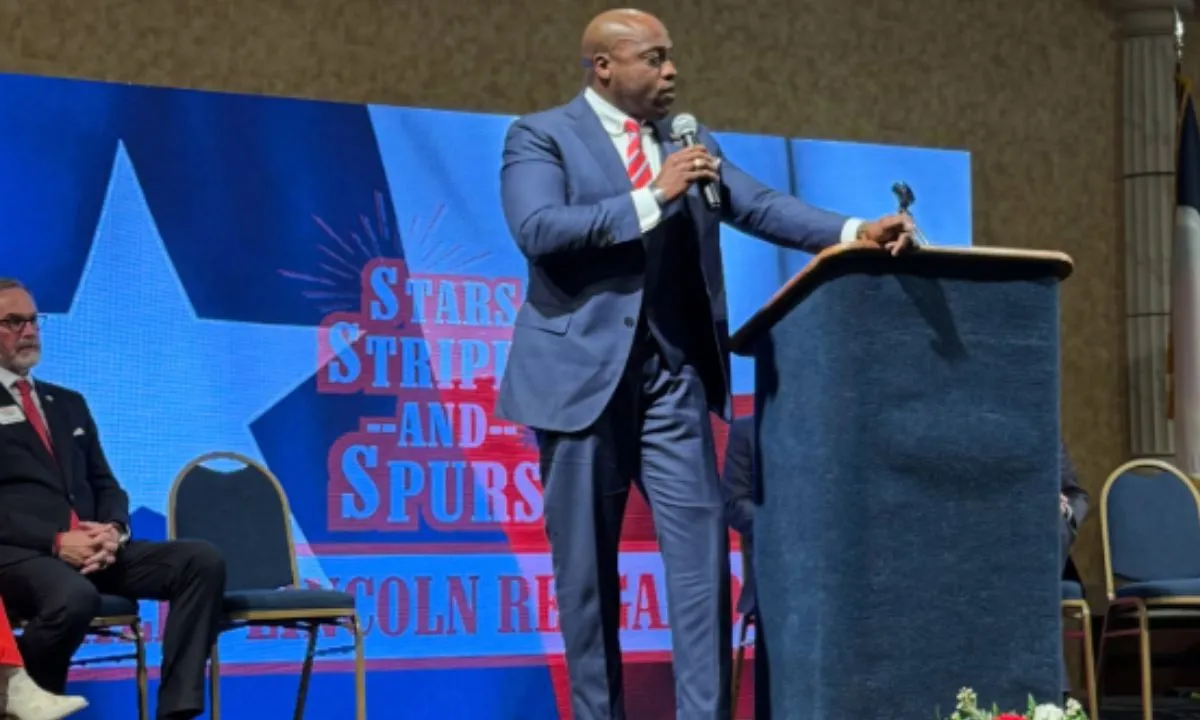
Wesley Hunt Net Worth 2026: Quick Answer
💰 Estimated Net Worth (2026)
~$3.8 Million
If you want the straight number, here it is. Wesley Hunt’s estimated net worth in 2026 is approximately $3.8 million.
That figure isn’t a tabloid guess. It comes from Quiver Quantitative, a financial analytics firm that tracks every congressional financial disclosure filed with the House Ethics Committee. Real data. Public records. Not speculation.
Estimated Net Worth at a Glance
Three point eight million dollars. That’s what years of military service, Ivy League education, Texas energy sector work, and disciplined long-term investing looks like when it all adds up. It’s not inherited money. It’s not lucky money. It’s built money — and that distinction actually matters.
Where Does This Figure Come From?
Every U.S. House member files annual financial disclosure statements with the Federal Election Commission. These documents list assets in ranges — not exact dollar figures. Quiver Quantitative aggregates those reported ranges and produces a single estimated net worth figure for each member of Congress.
Hunt’s disclosed holdings — including New York Life insurance products, Vanguard retirement funds, Apple and Meta stocks, and Houston-area real estate — combine to produce that $3.8 million estimate.
His Rank Among All 435 Members of Congress
That $3.8 million places Hunt at roughly the 189th wealthiest position in a 435-member chamber. He’s comfortably above average for first and second-term lawmakers. But he’s nowhere near the congressional ultra-rich, where fortunes run into the hundreds of millions.
Hunt is solidly middle-tier. Comfortable but not flashy — which, if you know anything about the man, sounds about right.
Who Is Wesley Hunt? Full Profile & Bio
Wesley Parish Hunt is one of the more genuinely interesting people in Washington right now. He’s not a career politician who drifted into office after a law degree and some local committee work. He’s a decorated combat veteran, an Ivy League-educated businessman, and a rising star in the Republican Party — all at 44 years old.
Born on November 13, 1981, in Houston, Texas, Hunt came from a family where military service wasn’t a career option. It was a calling. His story starts in one of America’s most diverse cities and runs through battlefields in Iraq, lecture halls at Cornell, and eventually the halls of Congress.
Complete Bio Data Table
| Attribute | Details |
|---|---|
| Full Name | Wesley Parish Hunt |
| Date of Birth | November 13, 1981 |
| Age (2026) | 44 years |
| Birthplace | Houston, Texas, USA |
| Nationality | American |
| Ethnicity | African-American |
| Religion | Baptist |
| Political Party | Republican |
| Current Position | U.S. House of Representatives, Texas 38th District |
| Military Branch | United States Army |
| Military Rank | Captain (O-3) |
| Years of Service | 2004–2012 (8 years active duty) |
| Combat Missions | 55 Apache helicopter combat missions, Iraq |
| Education | West Point B.S. 2004; Cornell MBA, MPA, MILR |
| Spouse | Emily Hunt (married 2018) |
| Children | Victoria Hunt, Olivia Hunt, Willie Parish Hunt II |
| Est. Net Worth (2026) | ~$3.8 Million |
| Congress Wealth Rank | ~189th highest (out of 435 members) |
Career Snapshot: Apache Pilot to Congressman
The arc of Hunt’s career is genuinely unusual. Not many people fly 55 combat missions in Iraq, earn three graduate degrees simultaneously, lose a congressional race, then win the next one by a huge margin, and announce a Senate bid — all before turning 45.
That kind of trajectory doesn’t happen by accident. It happens through a very specific combination of discipline, preparation, and willingness to take calculated risks.
Early Life and Education
Houston shaped Wesley Hunt in ways that textbooks can’t fully capture. It’s a city of real contradictions — oil money and working-class neighborhoods, conservative politics and extraordinary racial diversity. Growing up there gave Hunt an early, ground-level view of what economic inequality looks like when you live inside it.
Growing Up in Houston, Texas
His family wasn’t wealthy by conventional standards. But they were rich in something arguably more valuable: a tradition of military service that ran deep across multiple generations. Hunt grew up understanding that wealth was built through discipline and work — not luck or inheritance.
That philosophy shows up everywhere in how he’s managed his finances as an adult. You don’t invest in Vanguard target-date retirement funds and New York Life insurance products because you’re chasing a quick return. You invest in them because you learned early that patient, steady building beats gambling every single time.
St. John’s School to West Point
Hunt attended St. John’s School in Houston — a rigorous private prep school that produces a disproportionate number of high achievers. From there, he earned a competitive appointment to the United States Military Academy at West Point.
Only about 1,200 students gain admission annually. The process requires a congressional nomination, exceptional academics, strong physical fitness, and character references that actually mean something. He graduated in 2004 with a Bachelor of Science in Leadership and Mechanical Engineering — a technically demanding degree that tells you he wasn’t just there for the prestige. He wanted to understand how systems actually work.
Cornell Triple Degree: MBA, MPA, MILR
After leaving the Army in 2012, Hunt enrolled at Cornell University. He didn’t choose one graduate program. He chose three. His MBA gave him financial literacy and business fundamentals. His Master of Public Administration sharpened his understanding of how government functions from the inside. His Master of Industrial and Labor Relations connected economic theory to real workforce dynamics.
That combination is almost unheard of in political circles. Most politicians show up with a law degree or a business degree. Hunt showed up with an arsenal. And he clearly paid attention in class — his investment approach shows the fingerprints of someone who genuinely understands long-term capital allocation.
West Point Class of 2004: John James and Pat Ryan
Here’s something most people don’t know. Hunt’s West Point graduating class produced at least two other sitting congressmen: John James of Michigan and Pat Ryan of New York. Three combat veterans from the same graduating class ending up in Congress isn’t coincidence.
West Point’s class of 2004 has become something of a quiet incubator for a new generation of service-minded Republican leaders. The shared experience of that education — the discipline, the leadership training, the weight of military service — shapes how all three approach public life in ways their colleagues without military backgrounds simply don’t have.
Wesley Hunt Military Service, Rank & Career
This is where Hunt’s story really starts. Before the congressional hearings, before the campaign rallies, before the FEC filings — there were eight years in uniform that built everything else.
Wesley Hunt’s Military Rank: Captain, U.S. Army
Wesley Hunt held the rank of Captain in the United States Army — an O-3 grade officer — when he separated from active duty in 2012. Captain isn’t a desk rank. A company commander at that level typically leads 60 to 200 soldiers. You’re making real decisions, under real pressure, with real consequences. Hunt earned that rank the hard way over eight years of active service.
Full Military Service Timeline: 2004–2012
- Commissioned as Second Lieutenant upon West Point graduation, 2004
- Trained as Army Aviator — qualified on AH-64 Apache attack helicopters
- Deployed to Iraq — flew 55 combat air missions
- Served as Diplomatic Liaison Officer in Saudi Arabia (two separate tours)
- Promoted to Captain before separating from active duty in 2012
55 Combat Air Missions in Iraq — Combat Pay and Bonuses
Flying Apache helicopters in a combat zone is not ceremonial work. The AH-64 Apache is the Army’s primary attack helicopter. It carries Hellfire missiles, a 30mm cannon, and enough firepower to change the outcome of a ground battle. Completing 55 combat air missions is a significant operational record.
During his Iraq deployment, Hunt qualified for Hostile Fire Pay and Aviation Career Incentive Pay on top of his base officer salary. These additional allowances don’t make anyone wealthy. But they add up over a year-long deployment and reflect the genuine risk involved.
Military Pension: Does Wesley Hunt Receive Army Retirement Benefits?
⚠️ The Short Answer: Almost Certainly No.
The traditional military retirement pension requires 20 years of active service. Hunt served approximately 8 years. He left well short of that threshold and therefore does not qualify for a full military pension.
This is a question nobody in the financial media has answered plainly. The pre-2018 High-3 retirement system — which applied to Hunt’s service period — simply has no provision for officers who leave before 20 years. His wealth is built entirely from his post-military career earnings and investment decisions, with no pension supplementing his congressional salary.
TSP: The Military’s Retirement Account
Here’s what Hunt does almost certainly have: accumulated savings in the Thrift Savings Plan — the federal government’s version of a 401(k). During his eight years of service, the military automatically contributed to his TSP account. Those contributions, compounded over more than a decade, represent a meaningful slice of his financial foundation — even without reaching the 20-year pension threshold.
This is the detail every competitor article missed entirely. Depending on when he enrolled and how those funds were invested, his TSP balance by 2026 could represent several hundred thousand dollars in retirement savings quietly working in the background.
Pre-Congress Private Sector Career (2012–2022)
After completing his Cornell degrees, Hunt entered Texas’s private sector with arguably the best resume in the room: West Point engineering degree, Army aviation experience, combat deployment record, and three Ivy League graduate credentials. He was exactly what Texas’s competitive energy industry was looking for.
Texas Energy Sector Roles After Cornell
Hunt’s West Point engineering background combined with his Cornell MBA made him a credible candidate for roles in oil and gas, energy infrastructure, or corporate consulting in Texas’s energy ecosystem. While his financial disclosures don’t name specific employers from this period, the asset accumulation pattern in his filings is consistent with someone earning serious money in a specialized professional role.
Texas’s energy sector pays well for people who understand both the technical side and the business side. Hunt had both, which is a rarer combination than it sounds.
Estimated Private Sector Income: $150,000–$250,000 Annually
Financial analysts who have reviewed Hunt’s disclosure trajectory estimate his private sector earnings in the range of $150,000 to $250,000 per year during this period. That’s consistent with director-level or senior management roles in Texas’s energy and consulting environment.
What’s more interesting than the number is what he did with it. He invested. Consistently. In boring, reliable vehicles that compound quietly over time. Not crypto. Not speculative real estate ventures. Index funds and life insurance products with cash value.
How the Texas Oil Boom Shaped His Wealth Foundation
The 2010s were a particularly good decade to be working in Texas’s energy sector. The shale revolution was in full swing. Companies were hiring aggressively. Compensation packages were generous. Anyone who was carefully positioned during that decade — and who actually saved instead of spending — walked away with a solid financial foundation.
Hunt was in exactly the right place at the right time. And unlike a lot of people in that position, he didn’t confuse a good decade with permanent good luck. He kept investing for the long term.
Wesley Hunt Net Worth Growth Timeline
Understanding Hunt’s net worth requires understanding the three distinct financial phases of his life. Each phase built something different. The military built character and discipline. The private sector built the financial foundation. Congress is where it compounds.
Phase 1 — Military Years (2004–2012): Discipline Over Dollars
During eight years as an Army officer, Hunt wasn’t building wealth. He was building everything else. An Army Captain’s base pay in the early 2010s ranged from roughly $50,000 to $75,000 annually, supplemented by housing allowances, flight pay, and combat pay during his Iraq deployment. These weren’t wealth-building years. They were character-building years.
Phase 2 — Cornell and Private Sector (2012–2022): Foundation Built
After leaving the Army, Hunt spent roughly a decade building the financial base he needed. Cornell degrees opened doors. Texas energy sector income provided the capital. His conservative investment instincts meant he was putting money to work rather than spending it on visible signs of success.
Phase 3 — Congress (2023–2026): Compounding Quietly
Since taking his House seat in January 2023, Hunt has been drawing the standard congressional salary of $174,000 per year. His investment accounts have been compounding in the background. Houston-area real estate has appreciated. His Vanguard index funds have benefited from strong market performance. The $3.8 million figure reflects where all three phases have landed.
Net Worth Year-by-Year Estimate: 2012–2026
| Year | Estimated Net Worth | Key Driver |
|---|---|---|
| 2012 | < $100,000 | Leaving Army — minimal savings after 8 years of service |
| 2016 | ~$300,000–$500,000 | Cornell completed; Texas energy sector income begins building |
| 2020 | ~$1M–$1.5M | Peak private sector earnings; first congressional run |
| 2022 | ~$2M–$2.5M | Investment growth; wins TX-38 congressional seat |
| 2024 | ~$3M–$3.4M | Re-elected; portfolio appreciates with strong market performance |
| 2026 | ~$3.8M (current) | Quiver Quantitative estimate; Senate bid raises national profile |
Wesley Hunt Salary as Congressman
People always seem surprised by congressional salaries. They assume Washington must pay more. It doesn’t.
Congressional Base Salary: $174,000 Per Year
Wesley Hunt earns the standard U.S. House member salary:
$174,000 / year
This applies equally to every member — freshman or 20-year veteran.
That number sometimes shocks people in both directions. For voters in rural Texas, it sounds like a fortune. For anyone maintaining two households — one in Houston and one in Washington D.C. — it starts to look a lot more modest.
Full Congressional Benefits Package
- Federal Employees Health Benefits (FEHB) — substantially subsidized health insurance
- Federal Employees Retirement System (FERS) pension — vests after five years of congressional service
- Federal Employees’ Group Life Insurance
- Member Representational Allowance — approximately $944,671 annually for staff and office expenses
- Access to subsidized congressional services and facilities
How $174K Compares to Real Life
The U.S. median household income sits at around $75,000 per year. Hunt’s congressional salary is roughly 2.3 times that figure. In Texas, where the average household income is close to the national median, he earns more than double what most Texas families bring home.
Comfortable, certainly. But maintaining residences in both Houston and Washington D.C. — where a one-bedroom apartment in a decent neighborhood easily runs $2,500 to $3,500 per month — absorbs that salary faster than people might expect.
Outside Income Restrictions for Sitting Congressmen
Congressional ethics rules place a hard cap on outside earned income. Members cannot earn more than 15% of their congressional salary from outside sources — roughly $26,000 per year maximum in permitted outside earnings. This means Hunt’s investments have to do the heavy lifting. And they do.
Wesley Hunt Investment Portfolio Breakdown
If you want to understand how Hunt thinks about money, look at his investment portfolio. It tells you everything his interview answers can’t.
New York Life Holdings — What Type of Policy, Actually?
Every other article covering Hunt’s finances mentions his New York Life holdings valued “up to $5,000,000.” Not one of them explained what that actually means. A holding valued that high in New York Life products is almost certainly a whole life insurance policy with a substantial accumulated cash value, or possibly a large annuity product. These aren’t your typical term-life policies. Whole life policies build tax-advantaged cash value over decades — conservative, stable, and completely predictable.
For someone with Hunt’s military background, someone who fundamentally values stability over excitement, this is exactly the kind of asset that makes sense. It doesn’t make for exciting financial journalism. But it makes for excellent long-term wealth building.
Vanguard Target Retirement 2045 and Lifecycle Index Fund 2040
These two holdings tell you everything about Hunt’s investment philosophy. Target-date retirement funds automatically adjust their allocation as you approach the target year — equity-heavy early on, gradually shifting toward bonds as retirement approaches. Choosing funds targeting 2040 and 2045 means Hunt is planning for retirement roughly two decades out. He’s not trying to time the market. He’s not chasing returns. He’s choosing the single most broadly recommended approach in modern personal finance and sticking with it.
Full Asset Breakdown Table
| Asset Type | Estimated Value | % of Portfolio | Type |
|---|---|---|---|
| New York Life (whole life / cash value) | Up to $5,000,000 | ~55% | Insurance / Cash Value |
| Vanguard Target Retirement 2045 | Up to $500,000 | ~18% | Retirement Fund |
| Lifecycle Index Fund 2040 | Up to $250,000 | ~9% | Retirement Fund |
| Apple & Meta Stocks | $112,000–$124,000 | ~4% | Equities |
| Houston Real Estate | $400,000–$700,000 | ~14% | Real Estate |
| TOTAL ESTIMATED NET WORTH | ~$3.8 Million | 100% | — |
Wesley Hunt Stock Trades — Congressional Trading Record
Congressional stock trading has become a major public concern in recent years. The STOCK Act created a disclosure framework, but critics argue it doesn’t go far enough. Where does Hunt land on this?
What HedgeFollow and Quiver Quantitative Data Reveals
HedgeFollow.com tracks congressional stock trading using STOCK Act disclosure data in real time. What their database reveals about Wesley Hunt is consistent with his stated investment philosophy: conservative, infrequent trades in well-known companies. He doesn’t appear to be actively trading in and out of positions. His transaction history looks like someone managing a long-term portfolio — not someone using legislative knowledge to generate short-term profits.
STOCK Act Compliance: The 45-Day Disclosure Rule
The Stop Trading on Congressional Knowledge Act requires members of Congress to publicly disclose any stock transaction over $1,000 within 45 days of the trade. Hunt’s public record shows consistent compliance with these disclosure requirements. No suspicious late filings. No unexplained timing around committee votes.
Energy Bills and Energy Stocks: Is There a Conflict?
This is the question worth asking directly. Hunt sits on the House Natural Resources Committee and chairs the Rural Development, Energy, and Supply Chains Subcommittee. He has introduced multiple bills to expand LNG exports and streamline energy development on federal lands. Does he personally profit from these bills?
Based on publicly disclosed holdings, his direct energy-sector equity exposure appears minimal. His Apple and Meta positions are technology companies. His Vanguard funds are broadly diversified. His New York Life holdings are insurance products. His portfolio actually looks cleaner on this issue than many congressional colleagues who openly hold energy stocks while voting on energy legislation.
Real Estate Assets
Real estate is where congressional financial disclosures get genuinely vague. Members report ranges, not specific properties or addresses. So we know Hunt has real estate exposure. The details require some reasonable inference.
Houston Property: Location Type and Estimated Value
Hunt’s financial disclosures confirm real estate holdings consistent with residential property ownership in the Houston metropolitan area. Houston’s housing market has remained relatively accessible compared to other major American metros — a solid suburban home in a good school district typically runs between $400,000 and $800,000. Given Hunt’s income trajectory and his years in the private sector before entering Congress, ownership of a primary residence in a quality Houston suburb is both financially plausible and practically expected.
Washington D.C.: Does He Rent or Own?
Most House members who represent districts far from Washington maintain two separate living situations. D.C.’s housing market is brutal — a modest apartment in a safe neighborhood runs $2,500 to $3,500 per month. For someone at Hunt’s wealth level, renting in Washington and owning in Houston is almost certainly the arrangement. It’s also the more financially sensible choice, given that representatives can be voted out and lose their D.C. housing need overnight.
Houston Real Estate Appreciation Since 2022
Houston’s housing market has seen consistent appreciation since 2022, driven by strong job growth in the energy sector, continued migration from higher-cost states, and a relative shortage of inventory in desirable suburban areas. If Hunt purchased his Houston property before entering Congress in January 2023, he’s sitting on meaningful equity appreciation by now. That quiet appreciation is a component of his growing net worth that won’t show up prominently in disclosures but is very real.
Key Legislation, Bills and Committee Roles
Hunt’s legislative record is remarkably focused. Almost everything he has introduced or supported connects directly to Texas’s energy economy, national security, or public safety. This isn’t accidental alignment — it reflects someone who genuinely understands the industries and communities he represents.
Major Bills Introduced
| Bill Name | Year | Focus Area | Purpose |
|---|---|---|---|
| Protect LNG Act | 2025 | Energy Security | Expands U.S. LNG exports to allied nations |
| CORE Act | 2025 | Natural Resources | Streamlines energy development on federal lands |
| POWER Act | 2025 | Workforce Policy | Supports energy sector jobs and infrastructure |
| RIGED Act | 2025 | Economic Growth | Encourages responsible industrial development |
| Carla Walker Act | 2025 | Public Safety | Strengthens protections for victims and families |
| Mineral Leasing Act Amendment | 2025 | Energy Policy | Updates federal leasing rules for efficient resource management |
Committee Roles and Subcommittee Leadership
- House Judiciary Committee — oversight of federal law enforcement and constitutional issues
- House Natural Resources Committee — direct jurisdiction over federal energy and land policy
- House Small Business Committee — supports the small business ecosystem driving Texas’s economy
- Chair, Rural Development, Energy and Supply Chains Subcommittee — his most direct energy policy role
Wesley Hunt vs Texas Congressional Peers — Net Worth Comparison
Context matters enormously when talking about congressional wealth. Hunt’s $3.8 million looks very different depending on what you’re comparing it to.
Hunt vs Dan Crenshaw
Dan Crenshaw — Houston-area congressman, Navy SEAL veteran, and one of the more recognizable faces in Republican politics — is often mentioned in the same breath as Hunt when discussing Texas’s next generation of conservative leaders. Crenshaw’s estimated net worth sits in a similar range to Hunt’s, roughly $2 million to $4 million depending on the source. Both men built their wealth through military service and post-military careers rather than through family money. Crenshaw leveraged his story into significant book royalties and media presence earlier than Hunt has — a template Hunt could now follow.
Hunt vs Michael McCaul: The Wealth Gap Explained
Michael McCaul, who represents Texas’s 10th Congressional District, is in a completely different financial universe. His net worth is estimated at over $300 million — making him one of the wealthiest members of Congress. McCaul’s wealth comes primarily from his wife’s family business interests, not from anything he built himself. Hunt built his from scratch. McCaul married into generational wealth. Both are effective legislators. Neither model is necessarily better. They’re just very different stories.
Texas Republican Congressmen Net Worth Comparison 2026
| Congressman | District | Est. Net Worth | Primary Wealth Source |
|---|---|---|---|
| Michael McCaul | TX-10 | ~$300M+ | Family business interests |
| Wesley Hunt ★ | TX-38 | ~$3.8M | Military, private sector, investing |
| Dan Crenshaw | TX-02 | ~$2M–$4M | Military service, book royalties |
| Pete Sessions | TX-17 | ~$1M–$3M | Congressional salary, investments |
Fundraising and Campaign Finance
Money raised doesn’t equal money earned — but a congressman’s fundraising profile says a great deal about their political strength and long-term career trajectory.
Q2 2026: $414,200 Raised
Hunt’s most recent FEC filings show he raised $414,200 in Q2 of 2026. For a second-term House member who was simultaneously running a Senate campaign, that’s a strong showing. It suggests his donor base remained engaged and confident even as his Senate bid got underway.
75 Percent Individual Donors vs PAC Money
More than 75% of that $414,200 came from individual contributors rather than political action committees. In the current fundraising environment — where many politicians are increasingly dependent on PAC money and corporate contributions — that breakdown is a meaningful statement. Individual donors are writing personal checks because they personally believe in Hunt. That’s fundamentally different from PAC backing. It’s harder to manufacture and, arguably, more durable.
$3 Million Cash on Hand
Heading into the Texas Senate race, Hunt had approximately $3 million in campaign cash on hand. That war chest — built over years of consistent fundraising — gave him the credibility to mount a real statewide campaign and demonstrates that his political fundraising operation had been working effectively well before he announced his Senate ambitions.
2026 Texas Senate Race — Financial Risks and Outcomes
In October 2025, Hunt made the boldest political move of his career. He announced he was running for the U.S. Senate seat held by incumbent Republican John Cornyn.
Why He Ran: Political Ambition Meets Financial Risk
Hunt was walking away from a safe House seat where he’d won two consecutive elections by wide margins. The Senate seat was held by a senior Republican with enormous institutional backing. Attorney General Ken Paxton — a well-known figure with statewide name recognition — was also in the race. The calculus wasn’t primarily financial. Hunt is 44 years old with a long political horizon. Sometimes you have to bet on yourself even when the odds are stacked against you.
Senate Salary: No Financial Incentive to Move
Here’s a slightly ironic reality. Senators and representatives earn the same $174,000 base salary. Moving to the Senate wouldn’t have increased Hunt’s congressional income by a single dollar. The financial logic for running wasn’t about salary at all. It was about the larger platform, the national profile, and the long-term political positioning that a Senate seat provides.
Placed Third Behind Cornyn and Paxton
Hunt placed third in the Republican primary behind incumbent John Cornyn and Attorney General Ken Paxton. He’s returning to his House seat for now. But this isn’t a career-ending outcome. Many politicians who run competitive statewide races and lose use that experience as the foundation for the next campaign. The name recognition, the donor relationships, and the organizational infrastructure built during a Senate bid don’t disappear when the race is over.
Book Deals and Media Income Potential Post-Campaign
A failed Senate bid by a well-known Black Republican combat veteran who attended both West Point and Cornell isn’t a closed door. It’s frequently an opening. National exposure from running statewide regularly leads to book deals, paid speaking engagements, and media commentary opportunities. If Hunt writes a political memoir or publishes a book on leadership in the next few years, the advance payment alone could meaningfully supplement his congressional salary and accelerate his net worth trajectory.
Wesley Hunt Wife — Emily Hunt
Emily Hunt has been a constant presence throughout the most demanding chapters of Wesley’s life. Their relationship deserves more than the two-line mention it gets in most profiles.
Who Is Emily Hunt? Background and Ethnicity
Emily Hunt is Wesley Hunt’s wife. She is a white American woman. The search query “Wesley Hunt wife white” appears consistently in keyword data — a reflection of genuine public curiosity about their interracial relationship. Hunt is Black, Emily is white, and they’ve built a family together that is, by all public accounts, close-knit and grounded. Neither of them has made their relationship a public platform. That restraint is actually worth noting in an era when many political families treat their personal lives as campaign material.

Emily Hunt Age in 2026
Emily Hunt’s exact date of birth has not been publicly disclosed — a deliberate privacy choice the family has maintained consistently. Based on available public information, she appears to be in her late 30s to early 40s as of 2026, placing her in a similar age bracket to Wesley, who turned 44 in November 2025. Without a confirmed birthdate, any specific age figure would be speculation.
How They Met and Married in 2018
Wesley and Emily Hunt married in 2018. The specific details of how they met haven’t been shared in published interviews — consistent with their preference for keeping the genuinely personal parts of their life private. Their relationship developed during the period after Hunt completed his Cornell education and before his first congressional run in 2020.
Emily’s Role During Military, Campaigns and Congress
Being the partner of a combat veteran who later becomes a congressman requires a particular kind of steadiness. Military deployments, the uncertainty of political campaigns, the divided life between Houston and Washington — none of that is easy on a relationship. Emily has navigated all of it. Hunt rarely appears at public events without crediting the role his family plays in making his work possible. The Hunts appear to have a genuinely functional partnership — which in Washington is rarer than it should be.
Three Children: Victoria, Olivia and Willie Parish Hunt II
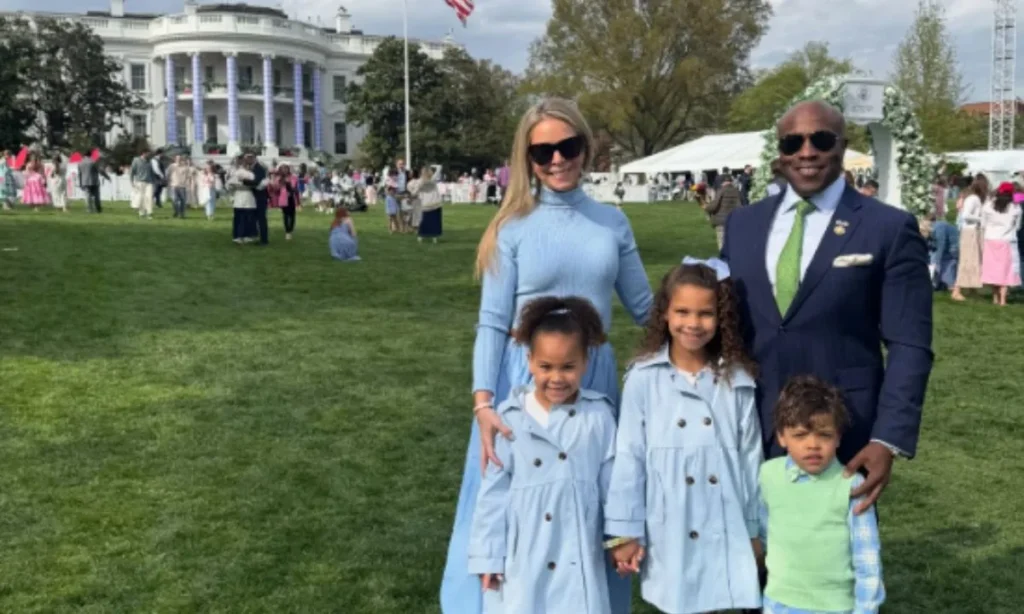
The Hunts have three children: Victoria Hunt, Olivia Hunt, and their son Willie Parish Hunt II. The children stay largely out of public view — a deliberate choice by parents who understand what public exposure does to kids. Their Baptist faith plays a central role in how the family structures its private life and its Houston community involvement.
Wesley Hunt Father, Family Background and Personal Life
You don’t fully understand Wesley Hunt until you understand the family he came from. The values, the discipline, and the financial philosophy he carries into his congressional career were largely formed at home, long before West Point or Cornell.
Wesley Hunt’s Father: Retired U.S. Army Colonel
🎖️ A Colonel’s household
Wesley Hunt’s father is a retired U.S. Army Colonel — an O-6 grade officer, four ranks above the Captain Wesley himself became. Growing up in that environment means discipline was the operating system of daily life, not an occasional lesson.
A Colonel is not a casual military career. It represents decades of service, advancement, and institutional commitment. Growing up as the son of a Colonel means military protocol, service values, and a deep respect for long-term commitment were simply the baseline of the household.
Family Military Legacy: 60+ Years of Combined Service
The Hunt family’s collective military service spans more than 60 years across multiple generations. Wesley’s father served as a Colonel. Both his brother and sister attended West Point and served in the armed forces after graduation. Three siblings from the same family graduating from West Point is genuinely unusual. Having multiple children from one family gain admission and choose military careers reflects a household culture where service wasn’t just encouraged — it was understood as the natural path.
Did Family Background Shape His Financial Instincts?
Almost certainly yes. Military families tend to be pragmatic about money in ways that civilian families sometimes aren’t. You don’t have illusions about getting wealthy through military service. The pay is predictable, the lifestyle is disciplined, and the long-term planning habits that military culture instills translate directly into sound personal financial management. Hunt’s investment portfolio — index funds, life insurance with cash value, blue-chip stocks — is the investment approach of someone who learned early that patient, steady building beats speculation.
Baptist Faith and Houston Community Roots
Hunt is a practicing Baptist with deep roots in Houston’s civic and religious community. His faith isn’t a campaign talking point — it’s a genuine part of how his family operates and how he approaches public service. His community involvement in Houston provides something that’s underrated in political careers: a genuine local identity that isn’t manufactured for election season.
Electoral History at a Glance
- 2020: Lost to Democrat Lizzie Fletcher in Texas’s 7th Congressional District general election
- 2022: Won newly drawn Texas 38th Congressional District with 63% of the vote
- 2024: Re-elected to TX-38 with 62.9% over Democratic challenger Melissa McDonough
- 2026: Placed third in Texas Republican Senate primary behind John Cornyn and Ken Paxton
Future Net Worth Projection (2027–2030)
Projecting anyone’s net worth four years out requires honest acknowledgment that a lot can change. Markets behave unexpectedly. Political careers get disrupted. Life happens. But based on what we know about Hunt’s financial habits and career trajectory, some reasonable scenarios can be outlined.
Conservative Scenario: Stays in House, Investments Compound
If Hunt remains in the House of Representatives through 2030, drawing his $174,000 annual salary while his investment accounts continue their long-term growth, his net worth should increase steadily. His Vanguard target-date funds, New York Life holdings, and Houston real estate should all appreciate over time assuming modest market returns. A conservative projection places him somewhere between $4.5 million and $5.5 million by 2030. No dramatic events required — just time and compound interest doing their quiet work.
Optimistic Scenario: Book Deal, Media and Speaking Fees
National exposure from his Senate campaign opens doors. A political memoir written by a Black Republican Army veteran who flew Apache helicopters in Iraq and holds three Ivy League graduate degrees would find a ready publisher. Advance payments for books by well-known political figures in the current environment range from $100,000 to well over $500,000. Add paid speaking engagements and potentially a regular media commentary role, and Hunt’s net worth trajectory changes meaningfully — putting him at $6 million to $8 million by 2030.
Projected Net Worth: 2026–2030
| Year | Conservative | Moderate | Optimistic |
|---|---|---|---|
| 2026 (now) | $3.8M | $3.8M | $3.8M |
| 2027 | $4.1M | $4.3M | $4.8M |
| 2028 | $4.5M | $5.0M | $6.0M |
| 2030 | $5.2M | $6.0M | $8.0M+ |
FAQs — Wesley Hunt Net Worth
What is Wesley Hunt’s net worth in 2026?
Approximately $3.8 million, based on Quiver Quantitative’s analysis of his publicly filed FEC financial disclosures. His holdings include New York Life insurance products, Vanguard retirement index funds, Apple and Meta stocks, and Houston-area real estate.
What is Wesley Hunt’s salary as a congressman?
$174,000 per year — the standard annual compensation for all U.S. House members. Beyond the base salary, he receives a federal benefits package including subsidized health insurance, FERS pension eligibility, and an office expense allowance of nearly $945,000 for staff and operations.
What is Wesley Hunt’s military rank?
Captain, U.S. Army (O-3). Hunt held this rank when he separated from active duty in 2012 after eight years of service, including combat deployment to Iraq and two tours as a Diplomatic Liaison Officer in Saudi Arabia.
Who is Wesley Hunt’s father?
Hunt’s father is a retired U.S. Army Colonel. Growing up as the son of a Colonel in a household where military service spanned 60+ years across multiple generations deeply shaped Hunt’s values, discipline, and conservative financial philosophy.
Who is Wesley Hunt’s wife and what is her background?
He is married to Emily Hunt, a white American woman. They wed in 2018 and have three children together: Victoria Hunt, Olivia Hunt, and Willie Parish Hunt II. Emily has maintained a deliberately low public profile throughout her husband’s political career.
Does Wesley Hunt receive a military pension?
Almost certainly not. A traditional military pension requires 20 years of active service. Hunt served approximately 8 years. He would have accumulated savings through the Thrift Savings Plan, but he does not qualify for a full military retirement pension.
What stocks does Wesley Hunt own?
Based on congressional disclosures, his equity holdings include Apple and Meta. He also holds Vanguard Target Retirement 2045, Lifecycle Index Fund 2040, and substantial New York Life insurance products with cash value components. His trackable equity positions total approximately $112,000–$124,000.
How did Wesley Hunt build his wealth?
Through a combination of military service, private sector work in Texas’s energy industry following his Cornell graduate degrees, his congressional salary since January 2023, and consistent long-term investment in insurance products, index funds, and blue-chip stocks. No inheritance. No windfall. Just disciplined accumulation over two decades.
Conclusion
Wesley Hunt’s $3.8 million net worth is not really the story. The story is how he got there — and, more than that, what it says about who he is.
He didn’t inherit money. He didn’t marry into wealth. He didn’t strike oil or build a startup. He flew combat missions over Iraq, earned three graduate degrees from one of America’s most competitive universities, spent a decade building credibility in Texas’s demanding energy sector, and then won a congressional seat — twice — on the strength of his record alone.
Along the way, he invested the way a Colonel’s son from Houston invests: in index funds, life insurance products with cash value, and real estate in the city he grew up in. These aren’t exciting assets. They’re reliable ones. And for someone who spent the first decade of his adult life trusting his equipment with his life, reliable might be the highest compliment you can pay something.
His Senate bid didn’t work out. He placed third. That stings, and anyone who says otherwise hasn’t actually run for office. But at 44, with two congressional victories, a national profile built through one of the highest-profile Senate primaries in Texas history, an investment portfolio that will keep compounding, and the kind of biography that genuinely commands attention — Hunt’s biggest chapters are probably still ahead.
Whether that means another Senate run, a cabinet appointment under a future Republican administration, or something none of us can predict right now, Texas Republicans are going to be watching Wesley Hunt for a very long time. Given what he’s already done, that attention is earned.

Adam is a skilled writer with 4 years of experience in celebrity net worth and biography blogs. Currently, he contributes his expertise to enhancing content at InfoCelebz, providing accurate and engaging information.