

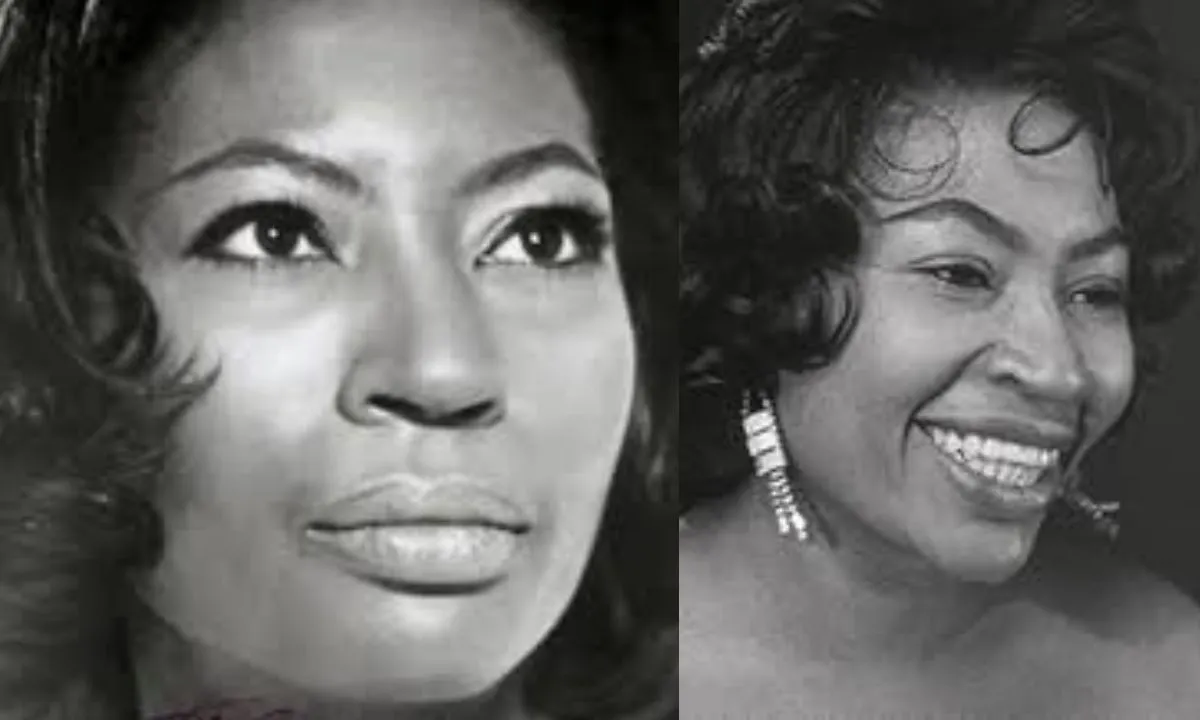
“Imagine walking into a room and instantly commanding respect with quiet grace while the loudest man in the building still calls you ‘his woman.’ That was Lynn Hamilton: the elegant force who tamed Fred Sanford’s chaos on TV and left a legacy of dignity that outshone every joke.”
Lynn Hamilton – Quick Biography Over view
| Detail | Information |
| Full Name | Alzenia Lynn Hamilton |
| Date of Birth | April 25, 1930 |
| Place of Birth | Yazoo City, Mississippi, USA |
| Nationality | American |
| Ethnicity | African-American |
| Education | Goodman Theatre, Chicago |
| Occupation | Actress (Stage, Television, Film) |
| Years Active | 1958 – 2009 |
| Spouse | Frank S. Jenkins (m. 1964 – d. 2014) |
| Children | 1 Daughter |
| Estimated Net Worth | $1 Million (USD) |
| Date of Death | June 19, 2025 |
| Height | Approx. 5 ft 4 in (163 cm) |
Introduction: Who Was Lynn Hamilton?
Lynn Hamilton — born Alzenia Lynn Hamilton — was one of the most graceful and enduring character actresses in the history of American television and theater. Over a career spanning more than five decades, she carved out a niche as a performer of rare depth, authenticity, and emotional intelligence. Whether she was playing a nurse, a neighbor, or a devoted companion, Hamilton brought an unmistakable warmth and dignity to every role she inhabited.
Best known for her recurring role as Donna Harris on the beloved NBC sitcom Sanford and Son (1972–1977) and as Verdie Grant Foster on The Waltons (1973–1981), Hamilton represented a generation of Black actresses who fought for respectful, multidimensional representation on mainstream American television. Her performances were never just about delivering lines — they were about presence, humanity, and truth.
Hamilton passed away on June 19, 2025, at the age of 95, in her hometown of Chicago, Illinois. Her death marked the end of a remarkable chapter in television history, but her legacy lives on through the characters she brought to life and the doors she opened for future generations of Black performers.
See also: Urijah Faber Net Worth: The California Kid MMA Legend, Entrepreneur & Inspiration
Early Life and Childhood: From Mississippi to Chicago
Alzenia Lynn Hamilton was born on April 25, 1930, in Yazoo City, Mississippi — a small Southern town steeped in the cultural and social struggles of the early twentieth century. She was the daughter of Nancy and Louis Hamilton, a humble family navigating life in the Deep South during an era defined by racial segregation and limited opportunity for African Americans.
When Hamilton was approximately four to twelve years old (accounts vary slightly), her family made the transformative decision to relocate to Chicago Heights, Illinois. This move was part of the Great Migration, a massive demographic shift in which millions of Black Americans moved from the rural South to the urban North in search of better economic opportunities and social freedoms.
Growing up in Chicago Heights, a suburb south of Chicago, Hamilton was exposed to a vibrant and culturally rich African-American community. It was here that her love for the performing arts began to take root. She attended Bloom High School in Chicago Heights, where she developed her communication skills and sense of artistic identity.
From an early age, Hamilton demonstrated a natural talent for expression. The cultural environment of Chicago, with its rich tradition of jazz, theater, and literary arts, nurtured her ambitions. She was determined to pursue acting — even in a world that offered few pathways for Black women in the performing arts.
Education and Formal Training: Building a Classical Foundation
Following her high school education, Lynn Hamilton took a decisive step toward her artistic calling by enrolling at the Goodman Theatre in Chicago — one of the most prestigious and historically significant theater institutions in the United States. The Goodman Theatre, affiliated with the Chicago School of Drama, offered rigorous classical training that would become the bedrock of Hamilton’s performance style throughout her career.
At the Goodman, Hamilton immersed herself in the classical theatrical tradition, studying acting technique, voice, movement, and dramatic interpretation. She was often the only Black student in her classes — a reality that was both isolating and motivating. Rather than being discouraged by this, Hamilton channeled the experience into a fierce sense of professional purpose.
Her training at the Goodman was not simply academic; it was transformative. It equipped her with the tools to handle complex, emotionally demanding roles and gave her the credibility to compete in the notoriously competitive world of professional theater and television. The discipline she developed there would carry her through more than 50 years of performance.
Career Journey: From Community Theater to National Television
Lynn Hamilton’s professional acting career began in community theater in Chicago, where she honed her craft in front of local audiences. These early experiences allowed her to experiment with a wide range of characters and dramatic styles before stepping onto larger stages.
In 1956, Hamilton made the bold decision to move to New York City, the undisputed capital of American theater and cultural ambition. New York offered greater visibility, more prestigious roles, and direct access to Broadway — the pinnacle of American stage performance. It also meant navigating a fiercely competitive, often racially exclusive entertainment industry.
Broadway Debut and Stage Work in New York
Hamilton’s Broadway debut came in 1959 with the production Only in America. This was followed by three more Broadway performances: The Cool World (1960), Face of a Hero (1960), and Tambourines to Glory (1963). While none of these productions enjoyed long runs, each one reinforced Hamilton’s reputation as a serious, capable stage performer with genuine theatrical range.
Alongside her Broadway work, Hamilton spent three years as a member of Joseph Papp’s New York Shakespeare Festival — an institution dedicated to bringing Shakespeare to diverse audiences. This experience was enormously significant for Hamilton, exposing her to classical European drama and establishing her credentials as a formally trained actress of broad capability.
Her stage work earned her a distinguished invitation to participate in President John F. Kennedy’s cultural exchange program, through which she traveled the world performing in productions of The Miracle Worker and The Skin of Our Teeth. This international exposure was exceptional for any actress of her era, and it expanded Hamilton’s artistic horizons in profound ways.
Film Debut: Shadows (1958–1959)
Hamilton’s on-screen career began with a landmark film. Shortly after arriving in New York, she landed a role in Shadows (1958–1959), the groundbreaking independent film directed by John Cassavetes. Widely regarded as a pioneering work of American independent cinema, Shadows was a raw, improvisational exploration of race, identity, and relationships in New York City.
Appearing in Shadows placed Hamilton in prestigious cinematic company and marked her as a performer willing to engage with socially significant material. The film was not a conventional Hollywood production — it was a statement, and Hamilton’s involvement in it signaled her artistic integrity and social consciousness from the very beginning of her screen career.
Key Film Credits: A Cinematic Legacy
| Year | Film | Role / Notes |
| 1958 | Shadows | Film debut; directed by John Cassavetes |
| 1971 | Brother John | Notable dramatic role |
| 1972 | Buck and the Preacher | Starred alongside Sidney Poitier |
| 1972 | Lady Sings the Blues | Portrayed Aunt Ida; Diana Ross starred as Billie Holiday |
| 1976 | Leadbelly | Role of Sally Ledbetter |
| 1979 | Roots: The Next Generations | Cousin Georgia Anderson |
| 1986 | Legal Eagles | Supporting role |
Sanford and Son: The Role That Made Her a Household Name
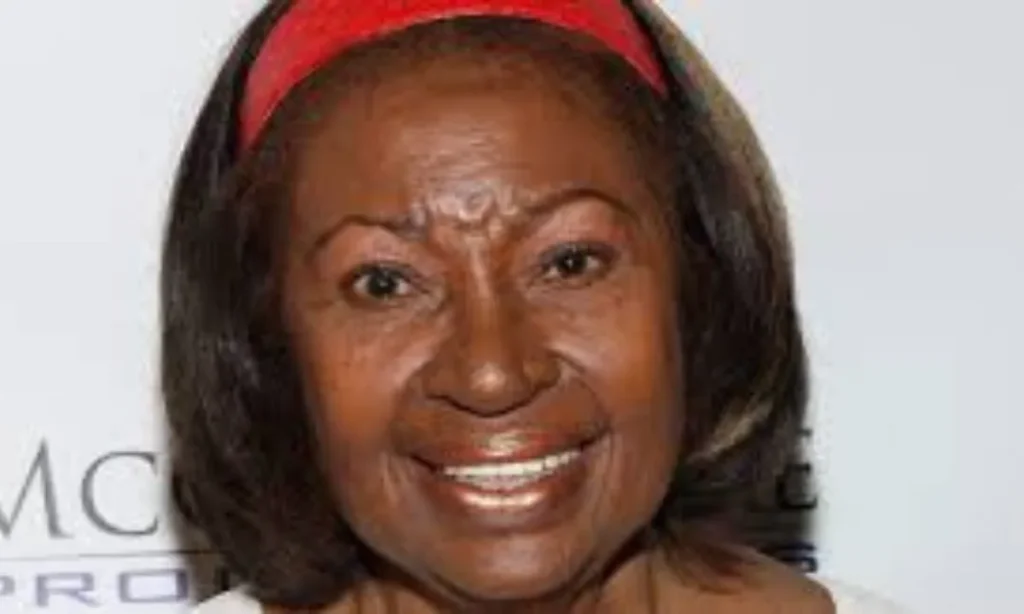
If any single role defines Lynn Hamilton’s screen career, it is undoubtedly Donna Harris on Sanford and Son — the wildly popular NBC sitcom that ran from 1972 to 1977. The show, starring the legendary Redd Foxx as junk dealer Fred Sanford and Demond Wilson as his son Lamont, was one of the highest-rated programs of its era and a cultural touchstone for Black American television.
Hamilton initially appeared in the show’s seventh episode as a no-nonsense landlady — a minor role that nonetheless caught the attention of producers. She was subsequently cast in the recurring role of Donna Harris, a licensed practical nurse who became Fred Sanford’s girlfriend and, eventually, his on-again, off-again fiancée. Over the course of the series, Hamilton appeared in more than 50 episodes.
The character of Donna was essential to the emotional texture of Sanford and Son. In a show built on sharp wit, raucous humor, and the comedic chemistry between Foxx and Wilson, Donna served as the show’s moral and emotional anchor. She was dignified, warm, patient, and professional — a representation of Black womanhood that stood in deliberate contrast to some of the more exaggerated characters in the series.
See also: Enrique Iglesias Net Worth: The Untold Story of the King of Latin Pop
Hamilton’s real-life chemistry with Redd Foxx was palpable on screen. Their interactions were layered, affectionate, and genuinely funny — evidence of two skilled performers who understood their characters deeply. Hamilton has spoken about how much she valued working with Foxx, whose comedic timing and genuine warmth complemented her own grounded style.
When the show was revived in 1980 under the reworked title Sanford, Hamilton was notably not invited back. Her character, Donna, was written out of the series — a decision that disappointed fans who had grown attached to the Hamilton-Foxx dynamic. Nevertheless, her legacy from the original run remains untouchable.
The Waltons: Portraying Verdie Grant Foster
Concurrent with her run on Sanford and Son, Hamilton secured another recurring role that would cement her status as one of television’s most reliable and beloved character actresses. Beginning in 1973, she appeared as Verdie Grant Foster on The Waltons — the critically acclaimed CBS drama set during the Great Depression and World War II in rural Virginia.
Verdie was a neighbor of the Walton family, and Hamilton appeared in 17 episodes of the series across eight years (1973–1981). The character offered Hamilton a very different performance register from Donna Harris — quieter, more interior, and rooted in the dignity of working-class rural Black life in mid-twentieth century America. Judy Norton, who played Mary Ellen Walton, praised Hamilton’s professionalism and the depth of experience she brought to the production.
The fact that Hamilton was simultaneously a beloved presence on two iconic American television series — one a sharp urban comedy, the other a sentimental rural drama — speaks to her remarkable versatility as an actress. She was not defined by a single type or tone; she could move between genres, registers, and emotional worlds with ease.
Television Appearances: A Broad and Diverse Portfolio
Beyond her two signature roles, Lynn Hamilton maintained a remarkably busy television career throughout the 1970s, 1980s, 1990s, and early 2000s. She appeared in an extraordinarily wide range of series, including both dramatic and comedic productions, soap operas, miniseries, and guest spots on prestige programming.
| Show | Years | Role / Notes |
| Sanford and Son | 1972–1977 | Donna Harris (50+ episodes) |
| The Waltons | 1973–1981 | Verdie Grant Foster (17 episodes) |
| Good Times | 1970s | Guest appearance |
| 227 | 1985–1989 | Recurring role |
| Roots: The Next Generations | 1979 | Cousin Georgia Anderson |
| Generations | 1989–1991 | Recurring soap opera role |
| Dangerous Women | 1991–1992 | Recurring soap opera role |
| The Golden Girls | 1985+ | Guest appearance |
| Port Charles | 1997+ | Recurring role |
| Brewster Place | 1990 | Miniseries appearance |
| ER | 2000s | Guest appearance |
| The Practice | 2000s | Guest appearance |
| Cold Case | 2000s | Guest appearance |
Personal Life: Marriage, Family, and Faith
Away from the spotlight, Lynn Hamilton led a life defined by deep personal commitment, quiet faith, and enduring love. In November 1964, she married Frank Shockley Jenkins Jr. — a poet, playwright, and intellectual whose most celebrated work was the satirical play Driving While Black in Beverly Hills. Their union would last nearly fifty years, until Frank’s death in August 2014 at the age of 89.
By all accounts, Hamilton and Jenkins shared a rich intellectual and creative partnership. Both were artists; both were engaged with the social and cultural currents of their time. Their marriage was described as one of genuine warmth and mutual respect, a quiet counterpoint to the often turbulent world of Hollywood relationships. Together, they had one daughter.
Hamilton was known to be a devout Christian whose faith was central to her sense of identity and purpose. She was described by those who knew her as deeply spiritual, grounded, and unpretentious — a woman whose values were reflected in the kinds of roles she chose to play and the way she carried herself in public and private life.
She was also known to be an avid animal lover with a particular fondness for horses, and she remained engaged with live theater throughout her retirement. Following Frank’s death in 2014, Hamilton returned to Chicago — the city where her artistic journey had truly begun — and lived there quietly until her passing in 2025.
The LaWanda Page Rumor: Setting the Record Straight
One of the most persistent misconceptions surrounding Lynn Hamilton during her Sanford and Son years was the widely circulated rumor that she was the younger sister of LaWanda Page — the actress who played the sharp-tongued Aunt Esther on the same series. Page’s real-life younger sister was also named Lynn Hamilton, which gave rise to considerable confusion among fans and media outlets alike.
The rumor was definitively debunked in 2016 by Demond Wilson, who played Lamont Sanford and worked alongside both women during the show’s original run. Wilson confirmed clearly that the two were not related by blood in any way. What is true, however, is that Hamilton and LaWanda Page were close friends who maintained a warm personal relationship until Page’s death in 2002.
Legacy and Cultural Impact: A Pioneer for Black Actresses
Lynn Hamilton’s contributions to American television and theater extend far beyond the characters she played. She was a barrier-breaker at every stage of her career — the only Black student in her acting classes at Goodman Theatre, the only Black performer in numerous stage productions, and one of the very few Black women to hold recurring roles on major network television series in the early 1970s.
At a time when Black women on television were frequently relegated to stereotypical or one-dimensional roles, Hamilton’s Donna Harris and Verdie Foster were something different: complex, dignified, emotionally grounded women whose inner lives were as rich as those of any character on screen. She demonstrated that Black women could carry the emotional weight of a scene, anchor a narrative, and connect with audiences of all backgrounds through sheer craft and humanity.
Her influence is felt in the work of countless Black actresses who followed in her path. She proved that character acting — the art of making secondary roles feel as vivid and essential as leading ones — is a demanding and honorable craft. In doing so, she elevated every production she was part of.
• Pioneer for Black women in classical theater training (Goodman Theatre, NY Shakespeare Festival)
• One of the first Black women to hold a recurring role on a top-rated U.S. network sitcom
• Represented dignified, multidimensional Black womanhood on mainstream television
• Participated in JFK’s cultural exchange program, bringing American theater to global audiences
• Career spanned over 50 years across stage, film, and television
• Inspired generations of Black performers through both her work and her personal example
Lynn Hamilton Net Worth: A Career of Steady Achievement
Lynn Hamilton’s estimated net worth at the time of her death in June 2025 was approximately $1 million USD. While this figure may appear modest relative to contemporary Hollywood standards, it represents a remarkable achievement for a character actress who built her fortune through consistent, disciplined work over more than five decades — rather than through a single blockbuster role or celebrity franchise.
Hamilton’s wealth was accumulated through multiple, overlapping income streams across the full breadth of her entertainment career. Her most financially significant contribution came from her recurring role on Sanford and Son, one of the highest-rated sitcoms of the 1970s. Television residuals from this show continued to generate income for Hamilton long after the series concluded, providing a degree of long-term financial security that many performers of her era never achieved.
| Income Source | Details |
| Sanford and Son (NBC) | Recurring role; 50+ episodes; residual income for decades |
| The Waltons (CBS) | 17 episodes over 8 years; additional residuals |
| Feature Films | Lady Sings the Blues, Leadbelly, Legal Eagles, and others |
| Soap Operas | Generations, Dangerous Women, Port Charles |
| Theater Work | Broadway, Off-Broadway, NY Shakespeare Festival, international tours |
| Guest Appearances | ER, The Golden Girls, The Practice, Cold Case, and more |
| Commercial Work | Occasional commercial appearances |
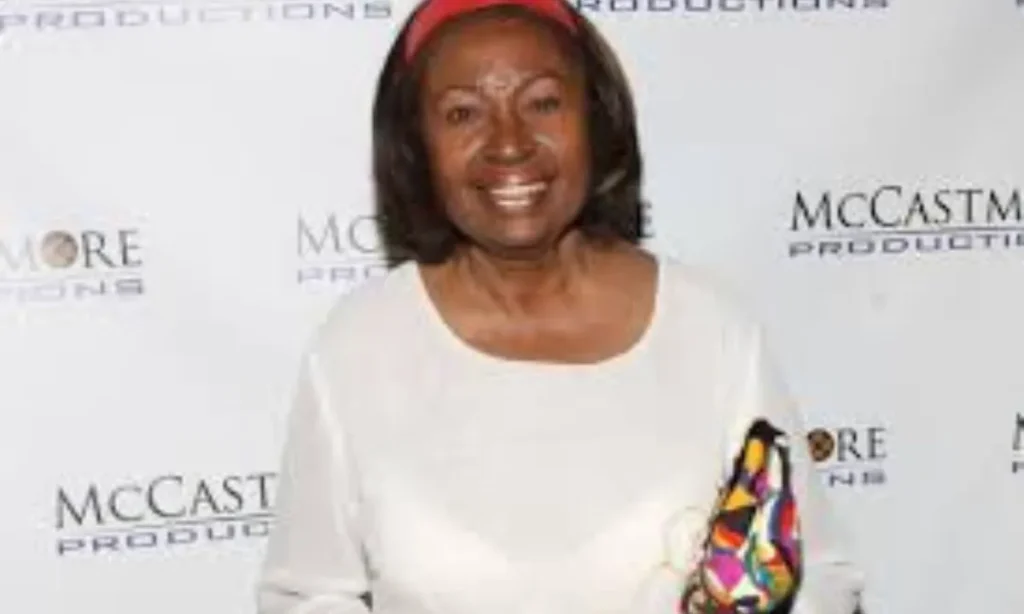
Hamilton was known to live simply and without extravagance. She did not pursue the trappings of celebrity culture, and her lifestyle was consistently described as grounded and unpretentious. Her decision to relocate from Los Angeles to Chicago following her husband’s death in 2014 was widely seen as a financially sound choice, as it allowed her to live comfortably on her accumulated savings in a city with a significantly lower cost of living than LA.
Her wealth, in the end, was not simply financial. It was the accumulated capital of a life lived with purpose, artistry, and integrity — a career built not on fame-seeking but on the sincere desire to tell meaningful stories with honesty and grace.
Retirement and Final Years
Lynn Hamilton officially retired from acting in 2009 after more than five decades of continuous professional work. Her retirement was quiet and deliberate — she withdrew from public life without fanfare, choosing to spend her final years close to family and community in Chicago. She remained engaged with the arts, attending local theater productions and maintaining her deep love for the stage even after she had stepped away from it professionally.
Following the death of her husband Frank Jenkins in August 2014, Hamilton relocated permanently to Chicago — the city where her artistic journey had truly begun sixty years earlier. There, she lived out her final years in peace and relative privacy, occasionally surfacing for tributes and anniversary celebrations of shows like Sanford and Son.
Lynn Hamilton died of natural causes on June 19, 2025, at her home in Chicago, Illinois. She was 95 years old. Her death was reported with genuine sadness by fans and colleagues who had grown up watching her on screen. Tributes poured in from across the entertainment industry, celebrating both her artistry and her character.
Notable Achievements and Career Milestones
• Born on April 25, 1930, in Yazoo City, Mississippi — one of America’s most segregated states at the time
• Relocated to Chicago as a child during the Great Migration, a defining chapter of African-American history
• Enrolled at the prestigious Goodman Theatre School in Chicago — often the only Black student in her cohort
• Made her Broadway debut in Only in America (1959), followed by The Cool World, Face of a Hero, and Tambourines to Glory
• Spent three years with Joseph Papp’s New York Shakespeare Festival, performing classical European drama
• Selected to participate in President John F. Kennedy’s cultural exchange program — toured internationally with The Miracle Worker and The Skin of Our Teeth
• Made her film debut in John Cassavetes’ landmark independent film Shadows (1958–1959)
• Appeared alongside Hollywood legend Sidney Poitier in the 1972 film Buck and the Preacher
• Starred in Lady Sings the Blues (1972) alongside Diana Ross in one of the most celebrated biopics of the decade
• Played Donna Harris in 50+ episodes of Sanford and Son — one of the highest-rated NBC sitcoms of the 1970s
• Held a recurring role on The Waltons (CBS) for eight years, appearing in 17 episodes between 1973 and 1981
• Simultaneously held two recurring roles on competing network series — a rare achievement for any actor of her era
• Appeared in acclaimed miniseries Roots: The Next Generations (1979) — one of the most-watched TV events in American history
• Maintained an active television career across six decades, spanning sitcoms, dramas, soap operas, and miniseries
• Married poet and playwright Frank Shockley Jenkins Jr. in 1964 — a creative partnership that lasted nearly 50 years
• Retired from acting in 2009 after more than five decades of continuous professional performance
• Passed away peacefully on June 19, 2025, in Chicago, Illinois, at the age of 95
• Left behind an estimated net worth of $1 million USD — built entirely through craft, discipline, and longevity
• Remembered universally as one of the most dignified and influential character actresses in the history of American television
See also: Tony Dungy Net Worth: A Coach, Leader, Legend, Man of Faith.
Frequently Asked Questions (FAQ)
Who is Lynn Hamilton the actress?
Lynn Hamilton is an American actress best known for her roles in The Waltons and Sanford and Son, with a career spanning several decades in television and film.
What TV show is Lynn Hamilton famous for?
She is most recognized for playing Verdie Foster on The Waltons and Donna Harris on Sanford and Son, two iconic American TV series from the 1970s.
Is Lynn Hamilton still alive?
Lynn Hamilton passed away on March 4, 2017, at the age of 83, leaving behind a celebrated legacy in American television history.
How old was Lynn Hamilton when she died?
Lynn Hamilton was 83 years old when she passed away in 2017, having been born on April 25, 1930, in Yazoo City, Mississippi.
What role did Lynn Hamilton play in Sanford and Son?
She played Donna Harris, the warm and steady girlfriend of Fred Sanford, appearing as a recurring character throughout the popular NBC sitcom.
What movies did Lynn Hamilton appear in?
Beyond television, Lynn Hamilton appeared in films such as Lady Sings the Blues (1972) and Leadbelly (1976), showcasing her range as a dramatic actress.
Where was Lynn Hamilton born?
Lynn Hamilton was born on April 25, 1930, in Yazoo City, Mississippi, and later became a prominent figure in Hollywood television during the 1970s.
Did Lynn Hamilton win any awards?
While she did not win major mainstream awards, Lynn Hamilton earned tremendous respect from fans and peers for her consistent and dignified performances on screen.
What was Lynn Hamilton’s character like on The Waltons?
Her character Verdie Foster was a compassionate, hardworking African-American housekeeper who brought warmth and social depth to the Walton family’s rural Virginia community.
Was Lynn Hamilton a stage actress as well?
Yes, Lynn Hamilton had a background in theater before her television success, which laid the foundation for her naturalistic acting style.
Conclusion: The Enduring Legacy of Lynn Hamilton
Lynn Hamilton was more than an actress. She was a symbol — of resilience in the face of systemic barriers, of artistry pursued with uncompromising integrity, and of the quiet, enduring power of representation. In a television landscape that too often reduced Black women to peripheral or stereotypical figures, Hamilton insisted on being seen fully: as a nurse, a neighbor, a lover, a friend — as a human being of depth and consequence.
From the community theaters of Chicago to the stages of Broadway, from the indie films of John Cassavetes to the living rooms of millions of Americans who tuned in every week to watch Sanford and Son and The Waltons, Lynn Hamilton made her mark with grace, discipline, and an unshakeable commitment to truth in performance.
Her story is not simply the story of one actress’s career. It is the story of an entire generation of Black performers who fought — often quietly, always persistently — to claim their rightful place in the American cultural imagination. Lynn Hamilton claimed that place, and she held it with honor for more than fifty years.
She leaves behind a body of work that continues to move, inspire, and matter — and a legacy that will endure long after the last rerun has aired.

Adam is a skilled writer with 4 years of experience in celebrity net worth and biography blogs. Currently, he contributes his expertise to enhancing content at InfoCelebz, providing accurate and engaging information.